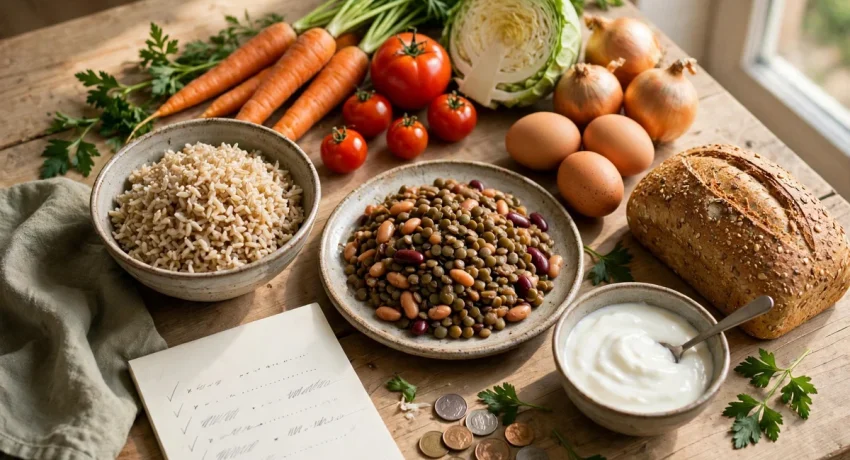
You stand in the grocery aisle, a small budget in your pocket and a head full of conflicting advice. One article tells you to buy salmon and quinoa; another insists on organic everything. It is easy to walk out convinced that eating well is a luxury you cannot afford. It is not. A balanced diet on a budget for beginners starts with ordinary, inexpensive foods and a simple plan — and this guide walks you through exactly how to build one.

What a Balanced Diet Really Means
Before you change anything about how you shop, it helps to know what you are aiming for. A balanced diet is not a strict meal plan or a list of forbidden foods. It is a pattern of eating that gives your body the nutrients it needs, most days, from a variety of food groups.
The U.S. Department of Agriculture’s MyPlate guide offers the clearest picture: fill about half your plate with vegetables and fruits, and the other half with grains and protein foods, with dairy or a fortified alternative on the side. The World Health Organization’s healthy diet guidance agrees: plenty of fruits and vegetables, whole grains, and legumes, with limited added sugars, salt, and highly processed foods.
Notice what is missing from that definition: expensive superfoods, branded supplements, and imported ingredients. A balanced diet is built from everyday foods. If you want to understand why these food groups matter, the science behind nutrition and sustainable healthy eating explains the ideas in more depth.
Why Healthy Eating Feels Expensive — and Why It Often Isn’t
The idea that healthy food costs too much usually comes from comparing the wrong things. A bag of chips is cheaper than a bag of almonds, so chips feel like the budget choice. But compare foods by what they give you — protein, fiber, vitamins, and how full they keep you — and the picture changes. Lentils, beans, eggs, oats, cabbage, carrots, and bananas are among the cheapest foods in almost any grocery store, and they are also among the most nutritious.
Three habits make food feel more expensive than it is: buying ready-made meals instead of basic ingredients, shopping without a plan, and throwing food away. A pre-cut fruit cup costs several times more than the same fruit whole, and food that goes bad before you use it is money lost. The biggest savings come from small shifts: choosing whole ingredients most of the time, planning before you shop, and using what you buy.
The Affordable Staples That Cover Every Food Group
Start with a small list of low-cost staples, one or two from each food group, and keep them stocked. When these are always in your kitchen, a balanced meal is never far away.
Protein: Lentils, chickpeas, and dried or canned beans are usually the cheapest protein you can buy, and they keep for months. Eggs are another low-cost option, and canned tuna or sardines bought on sale add variety.
Grains: Rice, oats, whole-wheat bread, and pasta are inexpensive and filling — buy larger bags when the price per kilo is lower.
Vegetables: Choose what is in season where you live; seasonal vegetables are almost always cheaper and taste better. Cabbage, carrots, onions, potatoes, and leafy greens are reliable low-cost choices, and frozen vegetables are just as nutritious as fresh ones.
Fruits: Bananas, apples, and oranges are usually the most affordable fresh fruits; frozen berries are a good alternative when fresh berries are out of season.
Dairy and healthy fats: Plain yogurt and milk are generally the cheapest dairy options — if you do not eat dairy, fortified soy milk can fill the same role (check the label for calcium and vitamin D). A bottle of cooking oil, a few peanuts, or sunflower seeds covers healthy fats cheaply, and you only need small amounts.
A Simple Formula for Building Every Meal
Once your staples are in place, you do not need a recipe book to eat well. Use this formula for every meal:
Half a plate of vegetables or fruit, a quarter of grains, and a quarter of protein — plus a small serving of dairy or a healthy fat.
That is it. A bowl of rice with lentils and a cabbage salad follows the formula. So does a plate of eggs, whole-wheat toast, and sliced tomato. A breakfast of oats with banana and yogurt follows it too — and if you want a quick version, a simple blueberry smoothie bowl made with frozen berries, yogurt, and oats is a good example of a balanced, low-cost morning meal.
Start with this formula for one meal a day — lunch is usually the easiest — and add a second once it feels natural. You are building a habit, not passing a test.
A Sample Week of Budget-Friendly Meals
Here is what a week can look like using only the staples above.
Monday: Lentil soup with bread and a side salad. Tuesday: Rice, beans, and sautéed cabbage with carrots. Wednesday: Omelette with onions and tomatoes, whole-wheat toast, and an apple. Thursday: Chickpea and potato curry with rice. Friday: Pasta with frozen vegetables and a boiled egg. Saturday: Vegetable stir-fry with rice and peanuts. Sunday: Oats with banana and yogurt, then a big pot of bean soup — enough left over for Monday’s lunch.
Notice the pattern: the same ingredients appear in different combinations, so nothing is wasted. A pot of lentils becomes soup one day and a filling for wraps the next. That reuse is the real secret of budget cooking.
Smart Shopping Habits That Lower Your Food Bill
Plan before you shop. Write down the week’s meals first, then make the list from the meals — this single habit prevents most impulse buying.
Shop with a list and a full stomach. Hungry shoppers buy snacks they did not plan for. A list keeps you focused; a full stomach keeps you honest.
Buy seasonal and compare per kilo. Vegetables and fruits in season are cheaper and fresher, and a larger bag of rice or lentils often costs less per serving — check the unit price on the shelf label.
Use frozen foods without guilt. Frozen vegetables, berries, and fish are frozen at their freshest, last for months, and stop the waste that comes from fresh food going bad.
Try store brands and cook once, eat twice. For staples like oats, rice, beans, and canned tomatoes, the store brand is usually the same product at a lower price. Doubling a pot of soup or beans takes almost no extra time and gives you a free lunch the next day.
Meal Prep Basics for Absolute Beginners
Meal prep can be as small as thirty minutes on a Sunday: cook a pot of rice, a pot of lentils or beans, and chop a few vegetables. Store them separately in the fridge, then combine them into different meals during the week in minutes. In the first month, prep only two or three items for three or four days — food stored longer can spoil. The goal is less daily cooking, not a fridge full of identical boxes.
FAQ:
Can I really eat a balanced diet on a very small budget?
Yes. The cheapest foods in most stores — lentils, beans, rice, oats, eggs, cabbage, carrots, bananas — are also highly nutritious. The challenge is rarely the price of healthy food; it is planning, cooking, and avoiding waste.
Do I need supplements if I eat on a budget?
Most people can meet their needs from food alone when their diet includes a variety of food groups. If you have a medical condition, follow a restricted diet, or are unsure, talk to a doctor or a registered dietitian before buying supplements.
Is frozen food as healthy as fresh food?
Yes, in most cases. Vegetables and fruits are usually frozen soon after harvest, which preserves their nutrients, and you use only what you need, so less is wasted. Choose plain frozen vegetables without added sauces or salt.
Final Thoughts
Eating a balanced diet on a budget is a skill, and it gets easier with practice. You do not need expensive ingredients or complicated recipes to start — just a short list of affordable staples, a simple plate formula, a shopping list made before you leave home, and the patience to repeat it until it feels normal. Begin with one meal, keep what works, and adjust what does not. If you want to go further, a complete guide to fitness, nutrition, and healthy living is a useful next read.