You hold up your phone, angle it the way you have seen other people do, take three pictures — and delete all three. The light is wrong, your face looks strange, and the photo looks nothing like you. It is a familiar frustration, and it is almost never about how you look. A good beauty selfie is mostly a matter of light, angle, and honesty: get those three right and the camera starts working with you instead of against you. This guide explains how, without expensive equipment, heavy filters, or pretending to be someone else.
Light First, Always
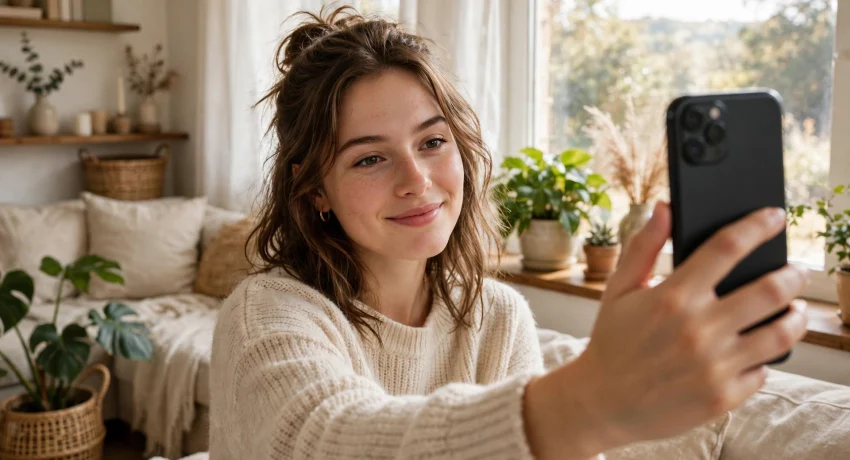
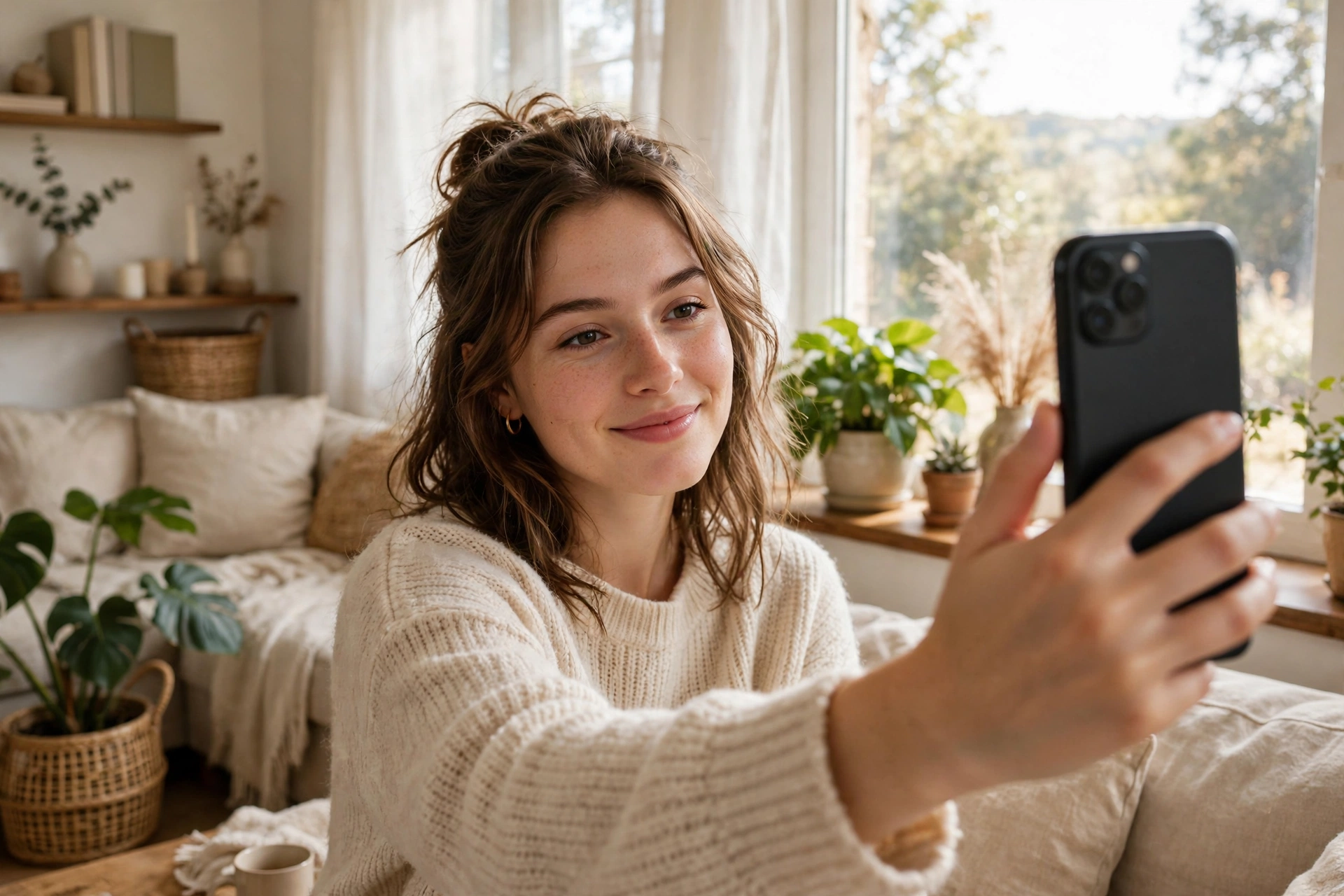
Light is the single biggest difference between a selfie you love and one you delete. The best light is free: stand facing a window in daylight, with the light falling softly on your face, and let the camera do the rest. Morning and late-afternoon light are the most flattering, because they are warm and gentle. Overhead ceiling lights are the worst, because they cast shadows under your eyes and chin; if you are indoors at night, a lamp placed at face level, slightly to the side, works far better than a light above you.
Never take a selfie with a bright light or a window behind you — the camera will darken your face to balance the background, and you will end up as a silhouette. And avoid harsh midday sun outdoors, which creates strong shadows. Shade, or a cloudy day, gives the soft, even light that flatters almost everyone.
Angle and Framing
Hold the phone slightly above eye level and tilt it down a little. This is the angle most people find flattering, because it opens up the eyes and defines the jawline. Holding the camera below your chin does the opposite, and a dead-straight angle at eye level often looks flat. Take a few test shots at slightly different heights and you will quickly find your angle — it is usually within a few centimetres of where you first tried.
Keep the framing simple: your face and shoulders, with a little space above your head, is enough. Hold the phone steady, rest your elbow against something if your arm gets tired, and use the timer or a short burst of shots so you can choose the most natural one. Most people look best in the second or third shot, once they have relaxed.
Background and Clutter
A good selfie is ruined more often by the background than by the face. A messy room, a bright object, or a stranger walking past will pull the eye away from you. Before you shoot, look behind you: a plain wall, a plant, a window, or a tidy shelf all work well. Step outside and a garden, a street, or a park can give a selfie a sense of place without competing with you. If the background is busy, move closer to the camera so your face fills more of the frame.
Skin, Makeup, and Honesty
A beauty selfie works best when it shows you as you are, on a good day. Clean, moisturised skin photographs far better than heavy makeup under bad light, and a little concealer where you need it usually beats a full face of foundation. If you wear makeup, blend it well at the jawline and in daylight, because the camera catches edges that a mirror forgives.
Be honest with yourself about filters. A light filter that evens out the light is harmless; a filter that changes your face shape, smooths your skin into plastic, or enlarges your eyes is not a better photo of you — it is a photo of someone else. The selfies people respond to most are the ones that look like the person they know, not a polished stranger.
Posing Naturally
The stiffest selfies come from trying too hard. Relax your shoulders, breathe out slowly, and think of something that makes you smile rather than forcing one — a forced smile is easy to spot. A slight turn of the head, a hand near your hair, or a natural laugh captured in a burst of shots will look better than a frozen pose held for ten seconds. If you are unsure, take a short video and pick a still frame: the best expression usually appears between poses, not during them.
It also helps to know your own face. Most people have a “good side” — one side of the face they prefer in photos — and there is nothing vain about using it. Turn that side slightly toward the camera and see the difference.
Editing Lightly
A little editing goes a long way. Brighten a dark photo slightly, straighten a tilted horizon, and crop out a distraction — and stop there. Avoid pushing the brightness so far that your skin looks washed out, and avoid sharpening and saturation sliders, which make photos look artificial very quickly. If you edit, do it in good light on your phone screen, and compare the edited version with the original before you post. If you cannot tell which is which, the edit was probably right.
Beauty trends change every season, but the basics of a good photo do not. What Beauty Trends Can Turn a Person Into looks at how trends shape the way we see ourselves, and 5 Most Fashionable Fall Colors to Add to Your Wardrobe covers colours that photograph beautifully in autumn light.
Posting, Privacy, and Confidence
Before you post a selfie, check two things: the background for anything private — an address, a document, a child’s school uniform, a mirror reflecting something you did not notice — and your own feelings about the photo. If you like it, post it; if you are posting it mainly to see how many likes it gets, it may be worth waiting. Confidence in a selfie comes from liking the picture yourself, not from the response it earns.
Remember that the selfies you see online are a highlight reel: the best of fifty shots, in the best light, after editing. Comparing your everyday photos with someone else’s best shots is not a fair comparison, and it is not a useful one. Your face, in good light, at a natural angle, is enough.
FAQs
What is the best time of day for a selfie?
Morning or late afternoon, facing a window or in open shade outdoors. The light is soft and warm then, and it flatters almost everyone without any equipment.
Should I use a filter?
A light filter that evens out brightness is fine. Avoid filters that change your face shape or smooth your skin completely — the photo should still look like you.
Why do I look different in selfies than in the mirror?
Because a mirror shows a reversed image and a camera shows you as others see you, and because a phone’s wide lens distorts slightly at close range. Hold the phone a little further away, at a slight angle, and the difference shrinks.
Final Thoughts
A beautiful selfie is not about having a perfect face or an expensive phone. It is about soft light, a slightly raised angle, a clean background, and a relaxed, genuine expression — the things that let the camera show you as you actually are. Learn your light, find your angle, edit lightly, and post the photos you like. The best beauty selfie is the one that looks like you, on a good day, in good light — and that is a photo worth keeping.