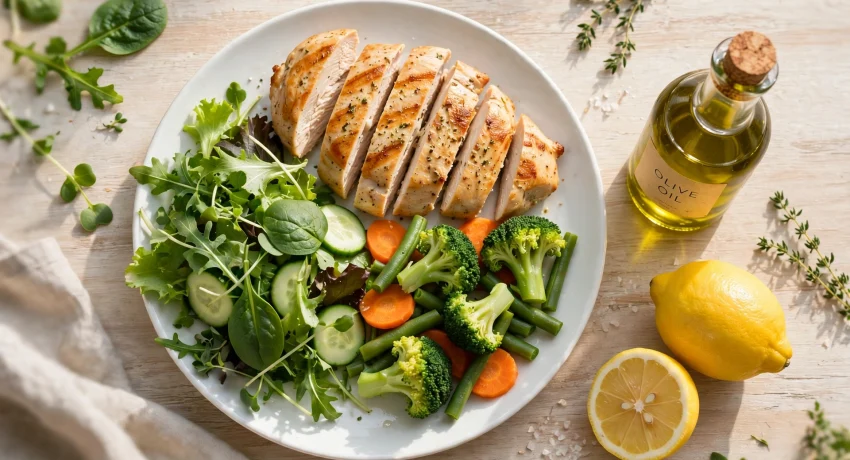
You know the moment. It is late, you are tired, and the food that sounds best is the food that leaves you heavy afterwards: the extra-cheesy takeaway, the fried snack eaten standing at the counter, the second helping of something rich that you did not really need. Nothing about that moment makes you a bad eater. It makes you a normal person with a busy life. But when fatty food becomes the default rather than the occasional treat, your energy, your sleep, and your clothes all start to notice — and that is when it is worth learning how to eat lighter without eating boring food.
This article is general information about everyday eating, not medical advice. If you have a health condition, take regular medication, or have been told to follow a specific diet, talk to a doctor or a registered dietitian before changing how you eat.
What “Extra Fatty” Actually Means
Fat itself is not the enemy. Your body needs fat for energy, for absorbing certain vitamins, and for keeping you full after a meal. The problem is the extra fat: the fat that arrives on top of what a meal already needs. A piece of grilled chicken is a reasonable meal. The same chicken deep-fried, served with creamy sauce, chips, and a sugary drink is a very different one — and the difference is almost entirely added fat.
It helps to think in terms of portions rather than bans. A small amount of butter on toast, a drizzle of olive oil on salad, or a handful of nuts are all ordinary parts of a normal diet. The trouble starts with the large, repeated portions: fried food several times a week, creamy sauces poured generously, fatty processed meats as a daily habit, and rich desserts after every meal. “Never eat extra fatty foods” is best read as a habit, not a rule: most of the time, choose the lighter version, and keep the rich version for occasions.
Where the Extra Fat Hides
Some fatty foods are obvious: deep-fried snacks, burgers dripping with cheese, and pastries glistening with butter. Others are quieter. A creamy pasta sauce can carry more fat than the pasta itself. A salad stops being light the moment it is covered in mayonnaise-based dressing and fried croutons. A coffee drink with whipped cream and syrup can contain as much fat and sugar as a dessert. Ready meals and takeaways are the biggest hiding places, because the fat is already cooked in and you cannot see it on the plate.
Processed meats deserve a special mention: sausages, salami, bacon, and many ready-made pies and pasties are high in fat even in small portions, and they are easy to eat quickly without noticing how much you have had. You do not need to give them up entirely, but treating them as occasional foods rather than everyday staples makes a real difference.
Easy Swaps That Still Taste Good
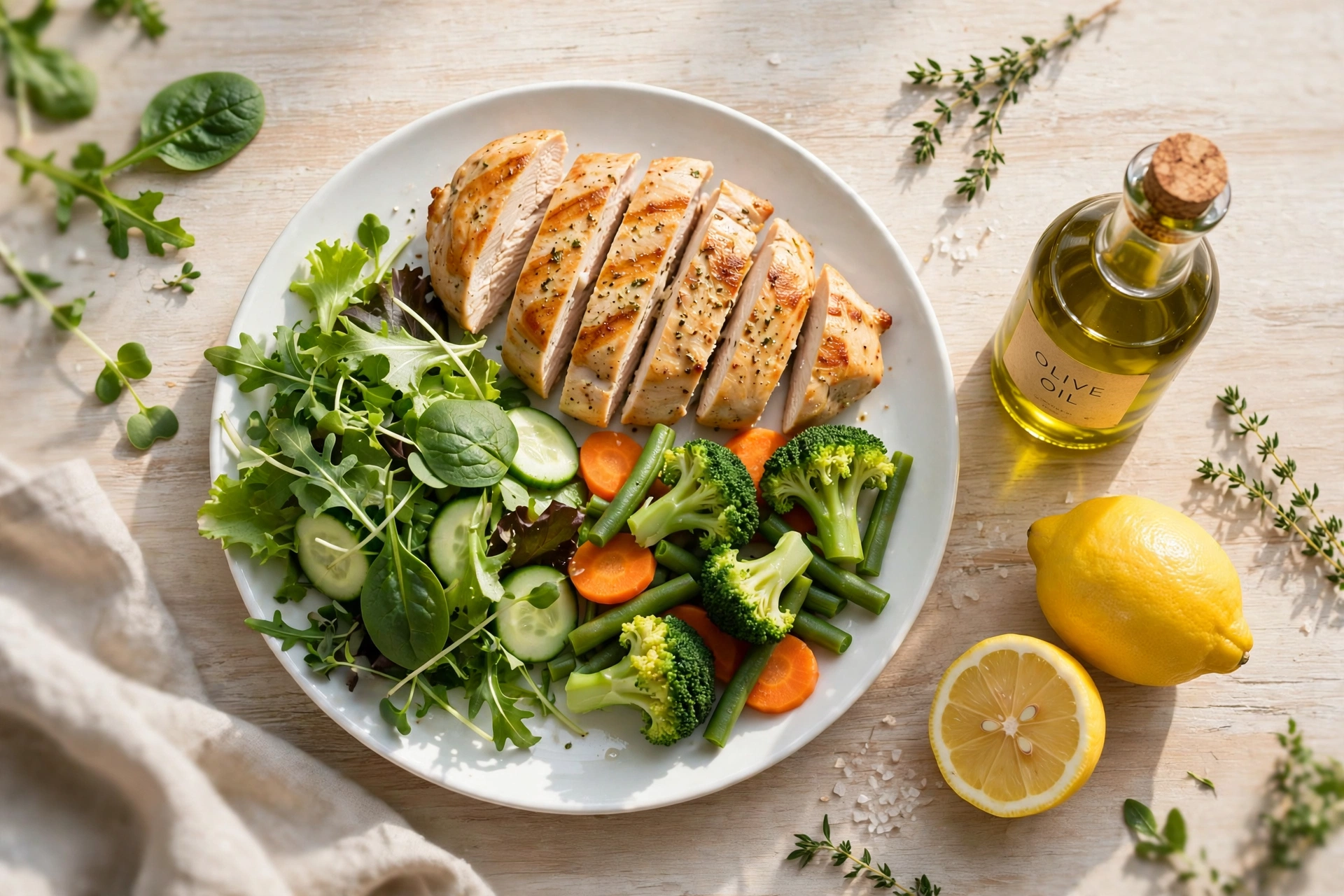
Eating lighter works best when the replacement is genuinely satisfying, not a sad imitation. Grilled or roasted chicken with herbs tastes better than a plain boiled version, and it beats a fried one on most days. A baked potato with beans and a little cheese is as comforting as chips with cheese sauce, and far lighter. Yoghurt with fruit and honey can replace a creamy dessert most evenings, and nobody misses the extra fat when the flavour is already there.
Small swaps add up quietly. Cook with a measured spoon of oil instead of pouring freely from the bottle. Choose tomato-based sauces over cream-based ones. Pick whole cuts of meat over processed ones. Keep fruit, nuts, and yoghurt visible in the kitchen so they are what you reach for first. None of these changes feels dramatic on its own, but together they change the pattern of a whole week.
For the science behind why these choices matter, The Science Behind Nutrition, Diet, and Sustainable Healthy Eating explains nutrients and balanced eating in plain terms.
Cooking Methods That Cut Fat Without Cutting Flavour
How you cook matters as much as what you cook. Grilling, roasting, steaming, and stir-frying with a little oil keep flavour while adding far less fat than deep-frying. A hot oven and a little seasoning can make roasted vegetables taste richer than fried ones. Marinating meat in lemon, garlic, herbs, or yoghurt adds flavour that fat used to provide, and a squeeze of citrus at the end of cooking brightens a dish without adding anything heavy.
It also helps to let fat drain away rather than soaking back in: rest grilled meat on a rack, drain fried food on paper if you do fry occasionally, and skim the fat from the top of stews and soups after they cool slightly. These are small kitchen habits, but they remove a surprising amount of fat from meals you already enjoy.
Eating Out Without Overdoing It
Restaurant and takeaway meals are where most people eat the most extra fat, because portions are larger and the cooking is richer than at home. A few habits keep them enjoyable without turning them into a weekly blowout: choose grilled over fried on the menu, ask for sauce or dressing on the side, share a rich starter or dessert instead of ordering one each, and stop when you are comfortably full rather than clearing the plate out of habit.
It also helps to decide before you order. Menus are designed to make the richest option sound the most appealing, and deciding while hungry makes the choice harder. A quick look at the menu online, or a simple rule — grilled main, vegetables on the side, one treat rather than three — takes the decision out of the hungry moment.
Reading Labels in Thirty Seconds
You do not need to study every label. Two numbers tell you most of what matters: total fat per 100 grams, and saturated fat per 100 grams. As a rough guide, a food with more than 17.5 grams of total fat per 100 grams is high in fat, and more than 5 grams of saturated fat per 100 grams is high in saturated fat. Compare similar products side by side — two yoghurts, two sauces, two ready meals — and the lighter one is usually obvious within seconds.
Watch out for serving sizes that make a product look lighter than it is: a small pack may list fat “per serving” for a serving nobody actually eats. Checking the per-100-gram figure keeps the comparison honest.
FAQs
Do I have to give up fatty food completely?
No. The goal is a pattern, not perfection. Rich food enjoyed occasionally, in a sensible portion, fits into a healthy diet. It is the daily, large-portion habit that causes problems.
Are all fats bad for you?
No. Unsaturated fats from foods like olive oil, nuts, seeds, and oily fish are a normal part of a healthy diet. The fats worth limiting most are the saturated fats in fatty and processed meats, butter, cream, and many baked and fried foods.
What is the easiest first change to make?
Change one daily habit rather than everything at once: swap a fried lunch for a grilled one, or replace a creamy sauce with a tomato-based one. Once that feels normal, change the next thing.
Final Thoughts
Never eating extra fatty foods does not mean never enjoying food. It means keeping rich food in its place: an occasional pleasure, not the everyday default. Choose grilled over fried most of the time, keep portions honest, learn the two numbers on a label, and let flavour come from herbs, citrus, and good cooking rather than from extra fat. Do that most days, and your energy, your sleep, and your waistline will notice — without you ever feeling like you are on a diet.
For the wider picture of food, movement, and rest as one system, Your Complete Guide to Fitness, Nutrition, and Healthy Living puts eating lighter alongside exercise and sleep.