Stand on a lakeside promenade in Switzerland in spring, with blossom overhead and snow still bright on the peaks across the water, and you get the season in a single view: winter has not quite let go of the mountains, while the valleys are already green, warm and full of life. It is one of the best times to visit, as long as you choose the right places and pack for both seasons at once.
This guide picks the places that genuinely shine in spring: lakeside towns, lower valleys and historic cities, rather than high trails that are still under snow.
What Spring Is Like in Switzerland
Swiss spring is changeable. Valley temperatures can be pleasantly warm by April and May, while high mountain passes and hiking trails may stay snowy into June. That split is the key to planning: enjoy lakes, towns, gardens and lower walks in spring, and save high alpine hiking for summer. Pack layers, a waterproof jacket and comfortable walking shoes, and check local conditions for any mountain railway or trail you plan to use.
The other advantage of spring is space. Summer crowds have not yet arrived, lake cruises and gardens feel relaxed, and hotel prices in many towns are kinder than in peak season.
Lucerne and Lake Lucerne
Lucerne is a perfect spring base. Its medieval Old Town, with painted facades and frescoed houses, sits beside the Reuss River, and the covered Chapel Bridge, with its water tower, is one of the most photographed sights in Switzerland. Nearby, the Lion Monument, carved into a rock face, commemorates Swiss Guards who died in Paris during the French Revolution and is quietly moving in person.
In spring, the lake comes alive: boats resume fuller schedules, and a cruise across Lake Lucerne to villages such as Vitznau or Weggis shows you the mountains from the water without any climbing at all. The Swiss Museum of Transport is a strong option for a rainy day, especially for families.
Lake Geneva: Montreux, Lausanne and the Vineyards
Lake Geneva, known locally as Lac Léman, is at its best in spring. Montreux has a flower-lined lakeside promenade, with the Alps across the water, and Chillon Castle, on a small island near the shore, is one of the most visited historic buildings in the country. Its lakeside position and medieval rooms make it an easy, rewarding half-day visit.
Lausanne, further along the lake, climbs steeply from the waterfront to a cathedral and an old town of narrow streets and small squares. Between the two cities, the Lavaux vineyard terraces, a UNESCO World Heritage landscape, begin to green up in spring. A walk or a short train ride through the terraces, with the lake below and the Alps beyond, is one of the great gentle experiences of Swiss spring.
Interlaken and the Jungfrau Region
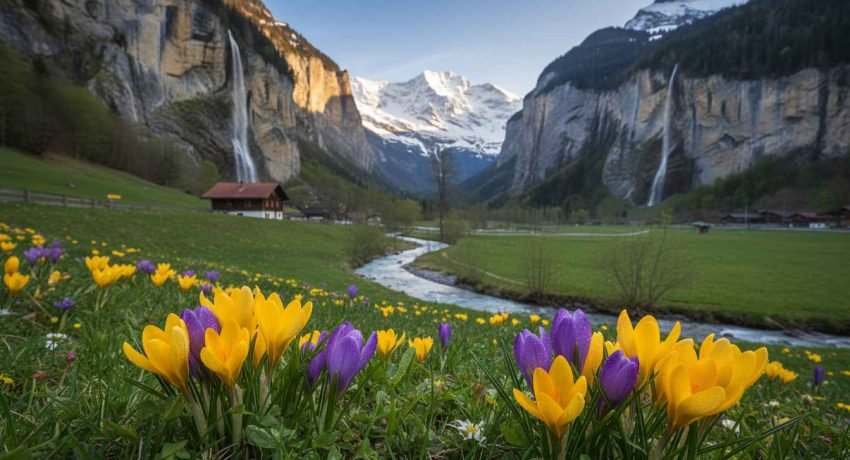
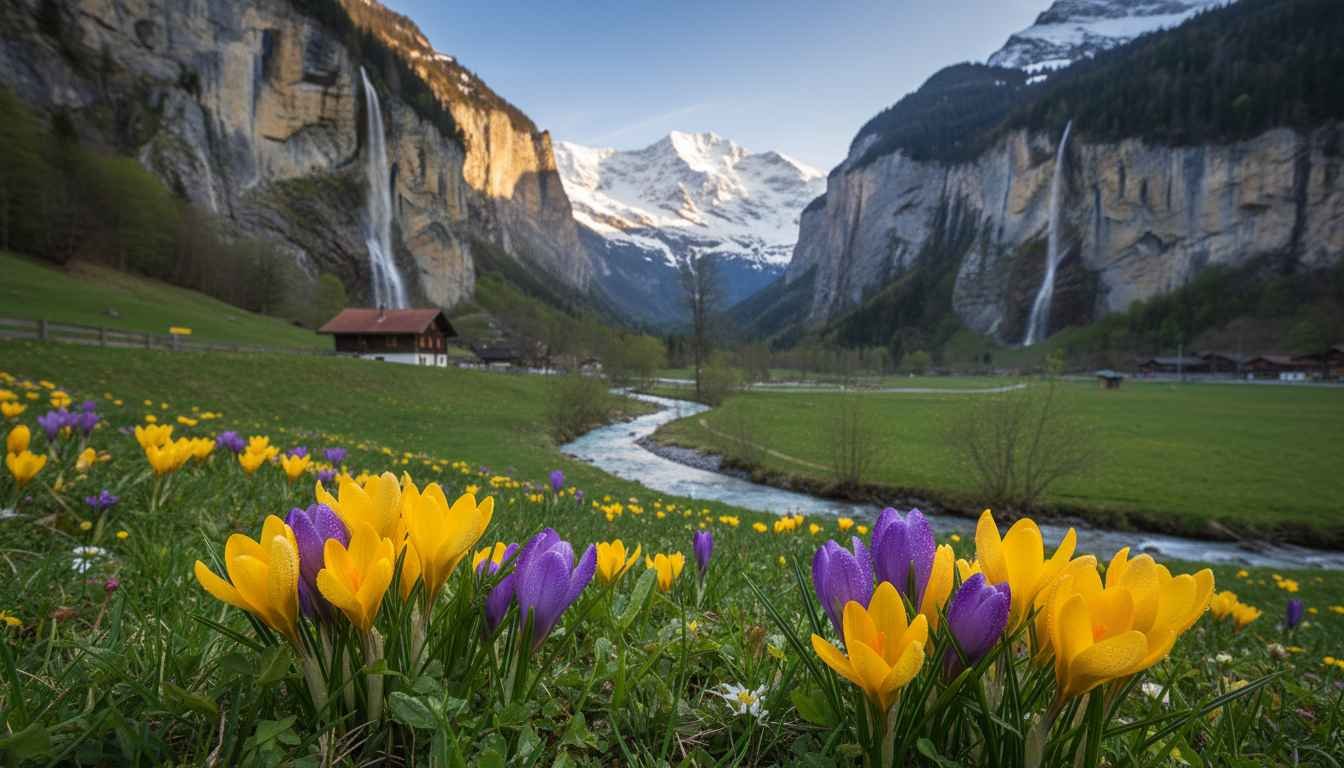
Interlaken sits between Lake Thun and Lake Brienz, and in spring it is a gateway rather than a destination in itself: boats on both lakes, paragliders over the valley, and trains into the mountains. The Lauterbrunnen Valley, with its sheer cliffs and waterfalls, is spectacular in spring, when snowmelt feeds falls such as Staubbach.
The Jungfrau Railway climbs to Jungfraujoch, billed as the Top of Europe, where you can step out onto snow and ice even while the valleys below are in full spring. That contrast is the point: you can experience high alpine scenery by train, without needing to hike high trails that are still snow-covered. Lower valley walks, around Grindelwald and Wengen, are usually accessible earlier, but always check trail conditions locally.
Zermatt and the Alps in Spring
Zermatt, the car-free village beneath the Matterhorn, is worth a spring visit for the mountain scenery alone. The Gornergrat railway climbs to a viewpoint facing the Matterhorn and its surrounding glaciers, and higher ski slopes may still be open in early spring, depending on snow conditions.
Spring in Zermatt is quieter than the winter ski season, which suits walkers who want village atmosphere and mountain views without the midwinter crowds. Take the railway up, walk the village trails that are clear, and treat any high path as conditional on local advice.
Planning a Spring Trip
Base yourself in one or two towns and use Switzerland’s trains for day trips: Lucerne for central Switzerland, and Montreux or Interlaken for the west and the Bernese Oberland. Rail passes can simplify travel if you plan several train, boat and mountain-railway journeys, so compare pass options against your actual itinerary rather than buying blindly.
For a different season in the same country, our guide to the best places to visit in Switzerland during autumn covers the golden larch season and harvest time. In spring, the equivalent advice is simpler: follow the blossom, stay low, and let the mountains stay white above you.
Frequently Asked Questions
Is Switzerland warm in spring?
Valleys and lakeside towns can be mild and pleasant, especially from April onwards, but mountain areas stay cold and snowy. Pack for both: a light jacket for the lakeside and warm layers for any mountain excursion.
Can you hike in the Swiss Alps in spring?
Lower valley walks are usually possible, but high trails are often still snow-covered or closed. Check local trail reports and choose lakeside and valley routes in early spring, saving high hikes for summer.
What is the best base for a spring trip?
Lucerne is the best all-rounder for a first trip, with a beautiful old town and easy lake and mountain excursions. Montreux suits travellers who want lakeside relaxation and vineyards, while Interlaken suits those focused on the Jungfrau region.
Final Thoughts
Switzerland in spring is a study in contrasts: blossom and snow, quiet lakes and busy waterfalls, warm promenades and cold mountain air. Choose valley towns and lake cruises, take the mountain railways for your alpine views, and do not fight the season by chasing high trails too early. Travel that way, and spring may quietly become your favourite time to see Switzerland.