(WordPress) –>
You open your wardrobe in the morning and stare at a rail full of clothes — yet somehow, nothing feels right to wear. Sound familiar? You are not short on clothes. You are short on clothes that actually work together. A capsule wardrobe fixes exactly that: a small, deliberate collection of versatile pieces that mix and match across every season, so getting dressed stops being a daily puzzle.
This guide walks you through building one from scratch — what to keep, what to buy, how to rotate pieces through the seasons, and how to stop buying clothes you never wear.
What Is a Capsule Wardrobe, Really?
A capsule wardrobe is a limited collection of essential, versatile items that combine into many different outfits. Most people aim for roughly 30 to 40 pieces per season — but the exact number matters far less than the principle: every item earns its place by working with several others.
The idea is not minimalism for its own sake but intention: instead of a wardrobe stuffed with impulse buys, you own fewer pieces you genuinely like that fit well and suit your life. The result is less decision fatigue, less money wasted, and a style that looks put together without much effort.
Start With Your Real Life, Not a Pinterest Board
Before you buy a single thing, look honestly at how you spend your days. A capsule wardrobe for someone who works from home looks very different from one built for a teacher, a nurse, or someone who attends formal events weekly.
Take a week and notice what you actually reach for. Most people discover they wear about 20 percent of their wardrobe 80 percent of the time. That 20 percent is your starting point — it shows your real style, colours and comfort level.
Then empty your wardrobe and sort everything into three piles: keep, store, and let go. Keep only what fits well right now and matches the life you actually live. Store out-of-season pieces you love. Let go of anything damaged, ill-fitting, or unworn for over a year.
The Core Pieces: Build Your Foundation First
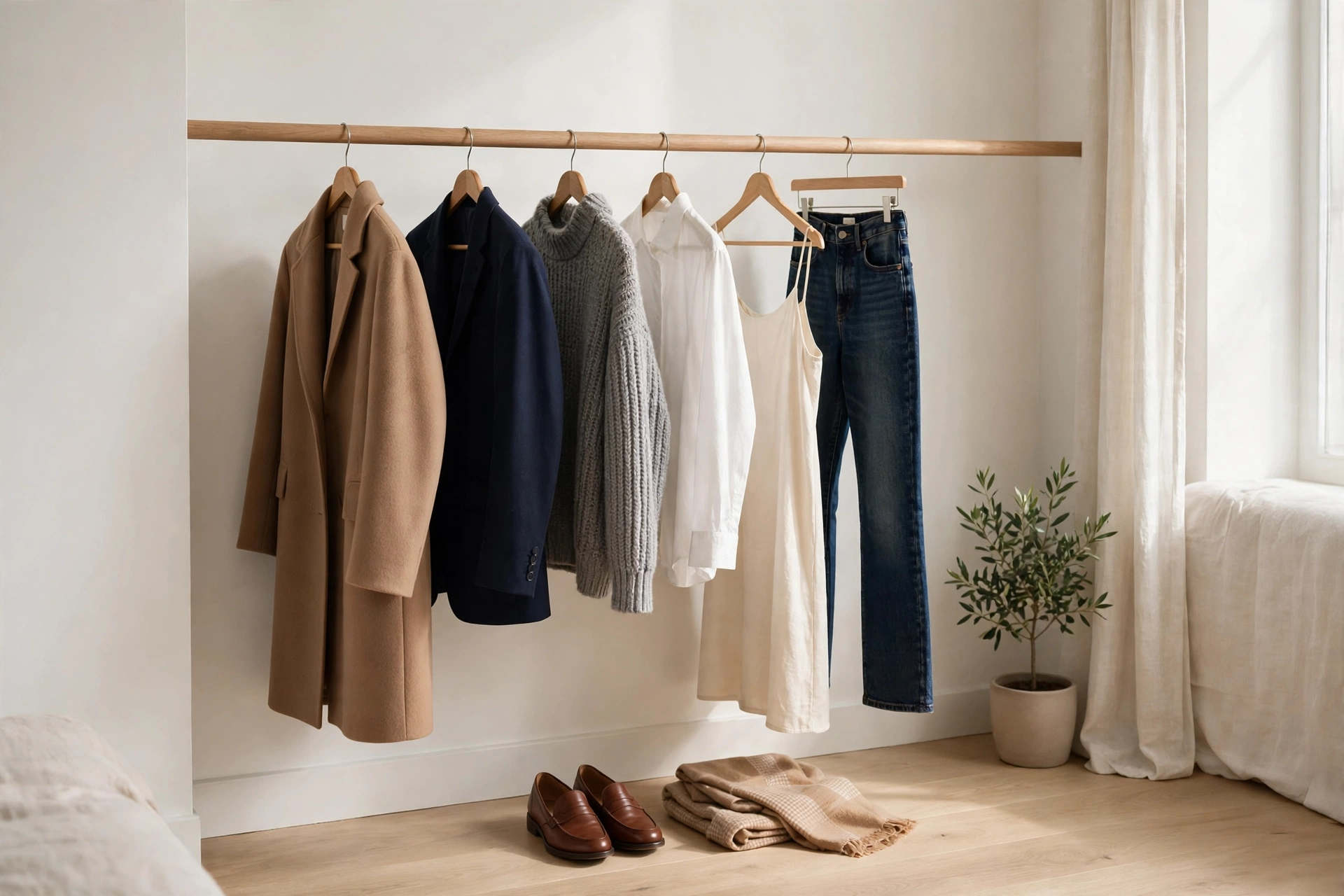
Every capsule wardrobe rests on a foundation of neutral, versatile basics — the workhorses that pair with almost anything:
- Tops: two plain t-shirts (white and black or navy), one good-quality shirt, one fine-knit sweater
- Bottoms: well-fitting dark jeans, one pair of tailored trousers, one versatile skirt or a second pair of trousers
- Outerwear: a classic blazer, a warm winter coat, and a light jacket for spring and autumn
- Dresses: one simple dress for dressing up or down
- Shoes: comfortable everyday trainers or flats, one pair of smart shoes, and weather-appropriate boots
Choose these in neutral colours — black, white, navy, grey, beige and camel — because neutrals combine effortlessly with each other and with any accent colour. Fit matters more than brand: a well-fitting affordable piece always looks better than an expensive one that does not sit right.
Season by Season: How to Rotate Without Rebuying Everything
The trick to a year-round capsule wardrobe is rotation, not replacement: keep your core pieces constant and swap a small set of seasonal items in and out.
Spring
Bring back lighter layers: a trench or light jacket, breathable cotton tops, and ankle boots or loafers. Add one or two fresh colours — soft pastels or a muted floral — to shake off winter, and reassess what survived winter and what needs replacing.
Summer
Swap heavy knits for linen and cotton: a couple of breathable dresses or lightweight shirts, sandals and a sun hat cover most summer days. Keep your dark jeans and blazer for cooler evenings instead of buying a whole separate summer wardrobe.
Autumn
Layering season begins: bring back the knitwear, add a scarf, and switch to boots. Colour matters most in autumn — warm, rich tones suit the season, and choosing the right fall colors worth adding to your wardrobe can refresh your whole capsule without buying new clothes.
Winter
Focus on warmth and texture: a proper coat, thermal layers, chunky knits and sturdy boots. Layers do the work in winter, so a few good pieces keep you warm and stylish all season.
At each seasonal change, spend thirty minutes swapping stored pieces, checking for wear, and noting any genuine gap — one missing item is a shopping list, not an excuse for a spree.
Choose Colours That Work Together
A capsule wardrobe fails when its pieces refuse to match. The fix is a simple colour palette: three neutrals as your base, plus two or three accent colours you love.
For example, a base of navy, white and grey pairs beautifully with sage green, burgundy or mustard. Every new purchase should match at least three things you already own — if it only matches one item, it is a one-outfit purchase, and those are what filled your wardrobe in the first place.
When unsure about a colour, hold the garment against your core pieces before removing the tags — this one habit prevents most wardrobe mistakes.
Buy Less, Buy Better
A capsule wardrobe only works if the pieces last. Cheap, poorly made clothes lose their shape after a few washes, forcing you back to the shops. Before buying, check the fabric, stitching and seams — natural fibres like cotton, wool and linen generally wear better and feel more comfortable than thin synthetics.
That does not mean everything must be expensive — just deliberate: ask whether a piece is well made, whether you will wear it at least thirty times, and whether it fills a real gap. If you are tempted by ultra-cheap trend pieces, it is worth asking whether ultra-cheap fast fashion is worth it first — the lowest price is rarely the lowest cost per wear.
A useful rule: wait 48 hours before buying anything not on your list. Most impulse wants fade; the ones that do not are usually genuine needs.
A Simple 5-Step Plan to Build Yours
- Audit: empty your wardrobe, keep only what fits and you wear, and note your real lifestyle needs.
- Define your palette: choose three neutrals and two or three accents that suit you and each other.
- List the gaps: compare what you kept against the core-pieces list above and write down only what is genuinely missing.
- Buy slowly: fill gaps one or two pieces at a time, checking quality and fit, and always against your palette.
- Rotate seasonally: store out-of-season pieces, refresh accents, and review the capsule every three months.
Give yourself a few weeks rather than a weekend — a capsule built slowly, piece by piece, lasts far longer than one assembled in a single shopping trip.
Common Mistakes to Avoid
Copying someone else’s capsule exactly. A list that works for a fashion blogger may not fit your climate, job or body — use lists as inspiration, then adapt them.
Buying everything at once. A sudden full-wardrobe replacement is expensive and usually wrong — build gradually and let your real preferences emerge.
Ignoring comfort. If a piece looks good but you avoid wearing it because it pinches or itches, it does not belong in your capsule.
Forgetting accessories. A scarf, a belt and one good bag can transform the same outfit across seasons.
FAQ: Building a Capsule Wardrobe
How many items should a capsule wardrobe have?
There is no magic number — most people find 30 to 40 pieces per season comfortable, and the right number is whatever covers your daily life without duplicates you never wear.
Can a capsule wardrobe work in a climate with four distinct seasons?
Yes — that is exactly what rotation is for. Keep a stable core of neutrals year-round and swap a small seasonal set in and out, storing off-season pieces rather than rebuying them.
Do I have to throw away all my current clothes?
No. Start with what you already own: keep the pieces you love and wear, store the seasonal ones, and let go only of what never gets worn. Buy only to fill genuine gaps.
Final Thoughts
Building a capsule wardrobe for every season is not about owning less for its own sake — it is about owning the right things. Start with your real life, choose a palette that works together, invest in pieces that last, and rotate with the seasons. Within a few months, getting dressed takes minutes, your wardrobe feels calm instead of chaotic, and every piece is one you actually love wearing.