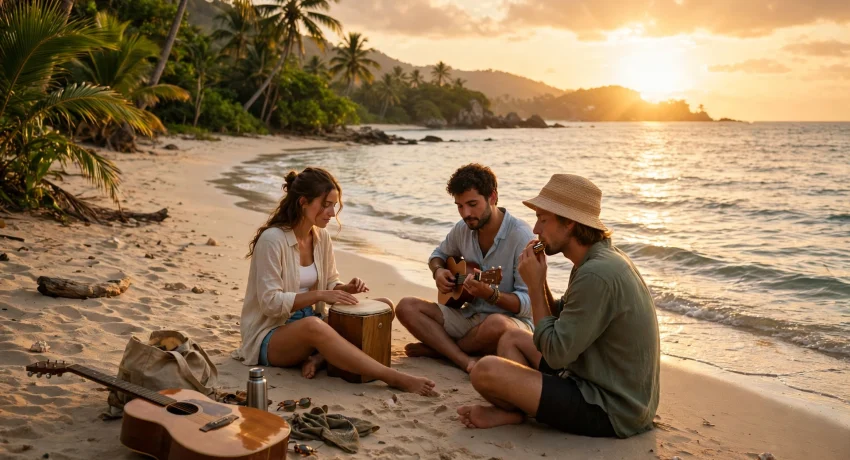
There is a particular kind of evening at the beach that stays with you: the sun low, the waves keeping their own slow rhythm, and somewhere nearby a guitar, a voice, or a small band playing without any stage at all. The shoreline has always had its own music — waves, wind, gulls — and when people add their own instruments to it, the result feels less like a concert and more like the beach itself singing along. That is the shoreline ensemble: not one band, but the whole meeting of music and sea.
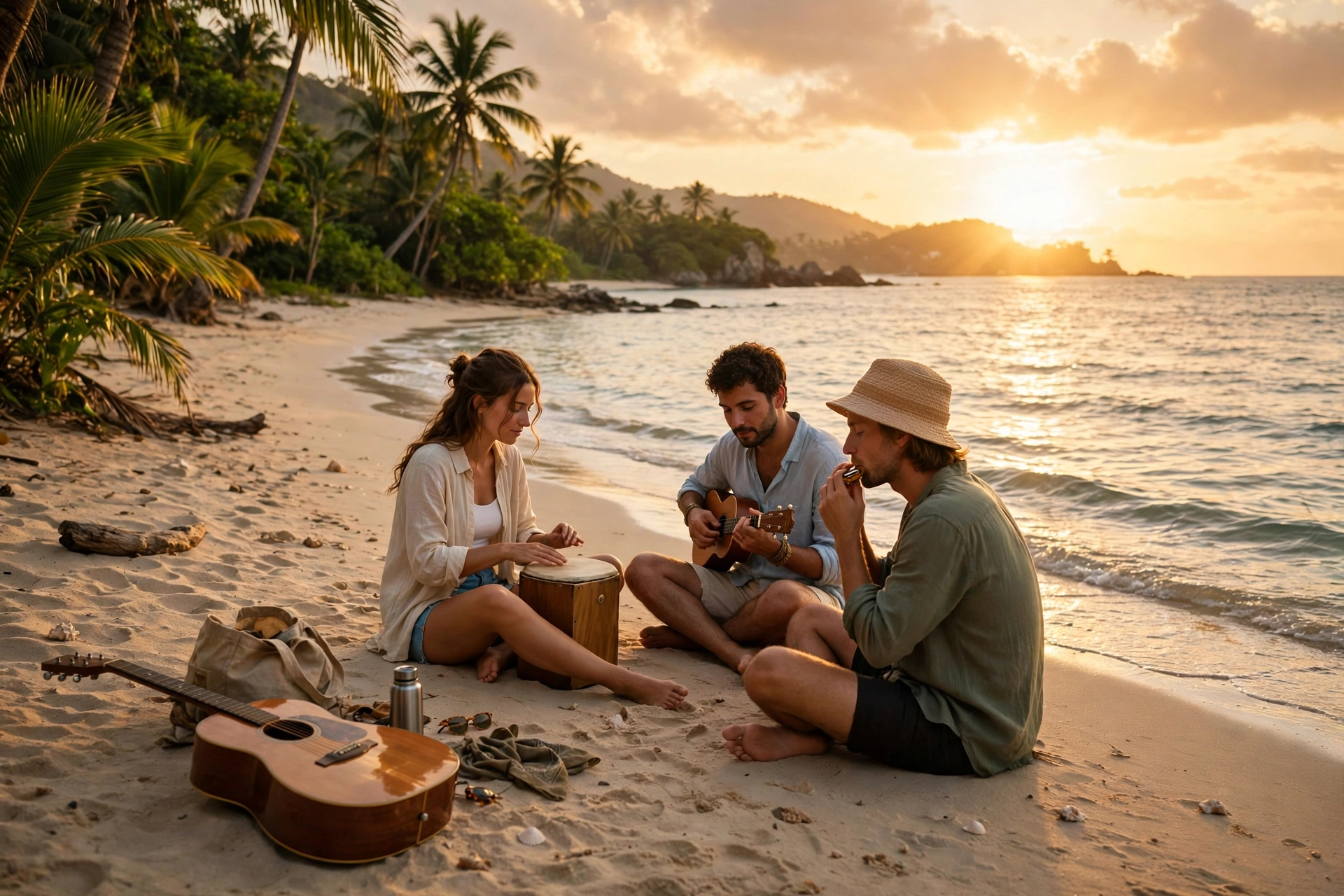
This guide is about enjoying that meeting properly — where beach music happens, how to plan a musical evening by the sea, and how to make your own shoreline soundtrack without spoiling the peace for anyone else.
The Shore’s Own Ensemble
Before any instrument appears, the beach is already making music. Waves break in repeating patterns, wind moves through dunes and palms, and birds call over the water. People have always listened to this — it is why so many of us find the seaside calming even when we cannot explain why.
That natural soundscape is worth protecting. The best beach music, whether performed or played through a speaker, sits alongside the sound of the sea rather than drowning it out. If you have to raise your voice to talk over the music, it is too loud for the shore.
Where Beach Music Lives
Live music by the sea takes many forms, and each has its own charm:
- Beach bars and promenade cafés: acoustic sets at sunset are a seaside staple in resort towns around the world.
- Open-air festivals: larger beach festivals pair big stages with the sea breeze, but they are a different experience from an intimate shoreline session.
- Street and promenade performers: buskers with guitars, drums or violins often gather where walkers slow down — near piers, harbour walls and sunset viewpoints.
- Your own gathering: friends with an acoustic guitar, a ukulele or just voices around a picnic blanket can be the most memorable version of all.
If you are travelling for beach music, check local listings and venue pages before you go. Small venues change their schedules often, and a set advertised last month may no longer be running.
Planning a Musical Evening by the Sea
A little planning turns a nice evening into a great one. Arrive before sunset so you can settle in while the light is still good, and bring a layer — sea breezes cool quickly once the sun drops, even after a warm day. A blanket or low beach chairs beat sitting directly on cooling sand, and a small torch or phone light helps for the walk back.
Food and drink are part of the ritual: a picnic, or a meal at a nearby café before the music starts, means you are not hunting for food in the dark. Keep glass away from the sand where possible, and take everything you brought with you when you leave — beaches at night hide litter that harms wildlife by morning.
Building Your Own Shoreline Playlist
If you prefer your own music to a live set, build a playlist the way a musician would build a set: start gentle, let it rise, and bring it back down as the evening closes. Acoustic songs, soft jazz, mellow folk and instrumental tracks tend to sit well with the sound of waves, while heavy, fast music often fights against it.
Keep the volume low enough that you can still hear the sea between songs. Headphones or a small speaker at conversation level are kinder to neighbouring beachgoers than a large speaker, and many beaches have local rules about amplified sound after dark — check before you go.
Playing Music on the Beach Yourself
An acoustic instrument is the shoreline-friendly choice: guitar, ukulele, hand drum or harmonica all carry outdoors without electricity. Salt air and sand are hard on instruments, though, so wipe strings and surfaces down afterwards and keep cases closed when you are not playing.
Be mindful of your audience. Not everyone came to the beach for a concert, so position yourself away from families settling children to sleep, keep sets reasonably short, and watch for cues — if people move away, lower the volume or take a break. The best beach musicians read the shore the way they read a room.
Beach Music Etiquette and Safety
- Respect quiet hours and local rules: many beaches restrict amplified music at night.
- Watch the tide: an evening spot that is dry at sunset can be underwater within an hour on some shores.
- Protect your hearing and your gear: keep speakers at a moderate level and electronics away from sand and spray.
- Leave no trace: take bottles, food wrappers and broken strings home with you.
- Look after wildlife: keep music away from nesting areas and do not disturb birds or marine animals for a better view.
FAQ: Music at the Beach
What kind of music suits a beach evening best?
Gentle, acoustic and unhurried music — folk, soft jazz, classical guitar, mellow vocals — tends to blend with the sound of the sea rather than compete with it.
Can I bring a speaker to the beach?
Usually yes, at a considerate volume and within local rules. Small speakers at conversation level are fine in most places; large amplified setups may need permission or be restricted after dark.
When is the best time for beach music?
The hour around sunset is the classic window: the light is beautiful, the breeze often softens, and crowds thin out. Check tide times too, so your spot stays dry.
Final Thoughts
The shoreline ensemble is not something you buy a ticket for — it is something you notice, join, or quietly create. Listen to the sea first, add music gently, and leave the beach as peaceful as you found it. If the idea of slow, peaceful travel appeals to you, our guide to finding peace in the heart of Bali carries the same unhurried spirit to a tropical shore, and wandering the canals of Venice shows how water and wandering pair just as beautifully in a city.