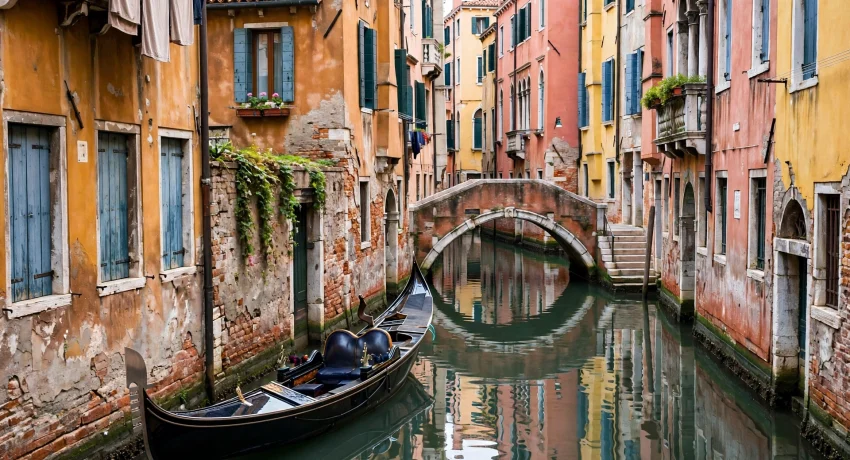
You arrive in Venice and the first thing you notice is the sound — or rather, the lack of it. No cars, no horns, just water lapping against stone, footsteps on bridges, and the occasional call of a gondolier. Wandering the canals of Venice is less like sightseeing and more like stepping into a city that was built for boats, and has never quite bothered to change its mind.
Start With the Grand Canal
The Grand Canal is Venice’s main street, a wide, curving waterway lined with palaces in faded pinks, ochres, and creams. The best way to see it is from the water: take a vaporetto, the city’s public waterbus, and ride its full length from the station to St Mark’s. Sit outside if you can, and watch the grand buildings slide past — each one once the home of a merchant family that grew rich on trade.
Crossing the canal on foot is an experience of its own. The Rialto Bridge, with its shops and its view up and down the water, is the most famous crossing, but the Accademia and Scalzi bridges are quieter and just as lovely. Pause in the middle of any of them. The view in both directions is the postcard, and it is free.
The Small Canals Are the Real Venice
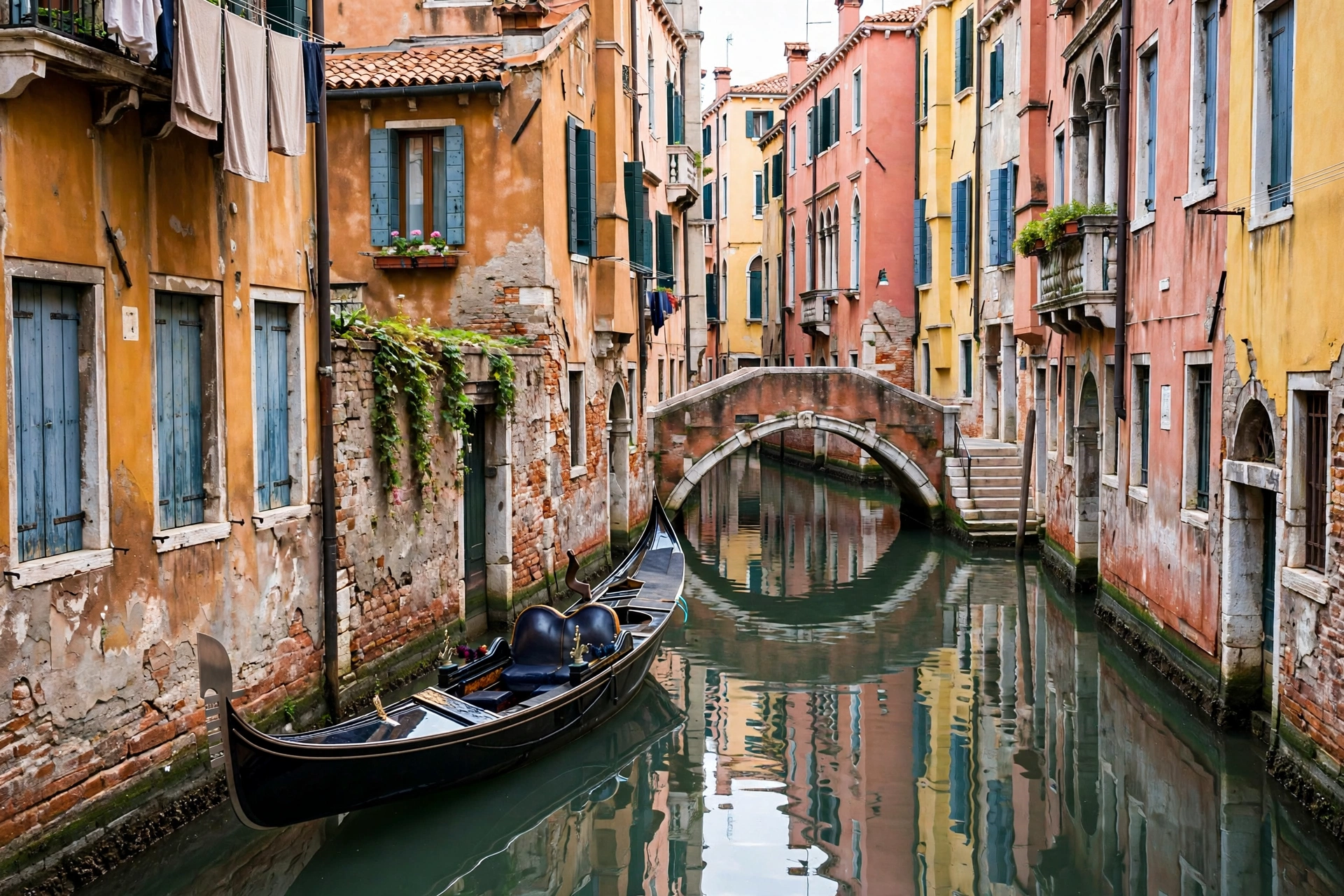
Step away from the Grand Canal and Venice changes. Narrow canals run between tall, close-set houses, with washing strung overhead and small bridges every few steps. This is where people actually live: children on their way to school, neighbours chatting from windows, cats on doorsteps. Getting pleasantly lost here is not a mistake — it is the plan.
Two districts are especially rewarding for wandering. Cannaregio, in the north, is residential and relaxed, with long, straight canals and local restaurants. Dorsoduro, across the Grand Canal, holds art galleries and a more bohemian feel. Both are far calmer than the crowds around St Mark’s Square, and both reward a slow pace.
Gondolas, Vaporetti, and Walking
A gondola ride is Venice’s classic experience, and it is worth doing once if your budget allows — agree the price and duration before you board, and choose a quiet side canal over the busiest stretch for a calmer ride. For everyday travel, the vaporetto is the sensible choice: cheap, frequent, and a wonderful way to see the city from the water.
But walking remains the best way to know Venice. The city is small — most sights are within a half-hour walk of each other — and its pleasure is in details: a carved doorway, a tiny square with a well, a bakery window. Wear comfortable shoes, because the bridges mean steps, lots of them, and carry water in summer.
St Mark’s, Murano, and Burano
No first visit skips St Mark’s Square, and rightly so: the basilica’s golden mosaics and the great open square are extraordinary. Go early in the morning to beat the crowds, and be aware that the square can flood during acqua alta, the seasonal high water that usually comes in autumn and winter. Raised walkways appear, and life goes on — it is part of Venice, not a disaster.
If you have a second day, take a vaporetto to the islands. Murano is famous for glassmaking, and you can watch glassblowers at work in the furnaces. Burano, further out, is a fishing village of brightly painted houses in every colour, and it is one of the most photographed places in Italy for good reason. Both islands feel like a different, slower Venice, and both are easy half-day trips.
Practical Tips for Canal Wandering
Stay overnight if you can. Venice in the early morning and late evening, when day-trippers have left, is a different city — quiet, golden, and entirely yours. Eat away from the main squares, where prices drop and quality rises. Learn a few Italian phrases; a friendly “buongiorno” opens doors. And if you are planning a slower trip overall, How to Plan a Slow Travel Itinerary sets out how to build unhurried days that leave room for wandering.
Venice also makes a memorable stop on a wider European journey — Best Places to Visit in Europe for Honeymoon includes it among the continent’s most romantic destinations, and even outside honeymoon season its canals set a high bar for romance.
FAQs
How many days do I need in Venice?
Two full days cover the main sights and a canal wander. Three days let you add Murano and Burano without rushing, and give you time to simply get lost.
Is a gondola ride worth the cost?
For many visitors, yes, once — especially on a quiet side canal. If the price is too high, a vaporetto ride along the Grand Canal gives you much of the same water-level view for far less.
When is the best time to visit Venice?
Spring and early autumn offer pleasant weather and thinner crowds. Summer is hot and busy; winter is quiet and atmospheric, with a chance of acqua alta flooding in the square.
Final Thoughts
Wandering the canals of Venice is not about ticking off sights. It is about letting a city built on water set your pace: cross a bridge, follow a canal, stop for coffee, and see where the next turn takes you. Venice rewards the wanderer, and the wanderer, in return, never quite forgets it.