You walk into your apartment after a long day, drop your keys on the nearest surface, and somehow the room already feels full — even though you own less than most people you know. The problem is rarely how much stuff you have. It is how the room is put together. A small apartment can feel calm and open, or cramped and cluttered, depending on a handful of decorating choices. The good news is that none of them require knocking down a wall or buying a whole new set of furniture.
These small apartment decorating ideas that feel bigger work with what you already have. They use light, scale, colour and storage in smarter ways, so the same square footage starts working harder for you.
Let the Light In First
Light is the cheapest way to make a room feel larger, and it is usually the first thing people get wrong. Heavy curtains, dark blinds and furniture pushed against the windows all shrink a room before you have done anything else.
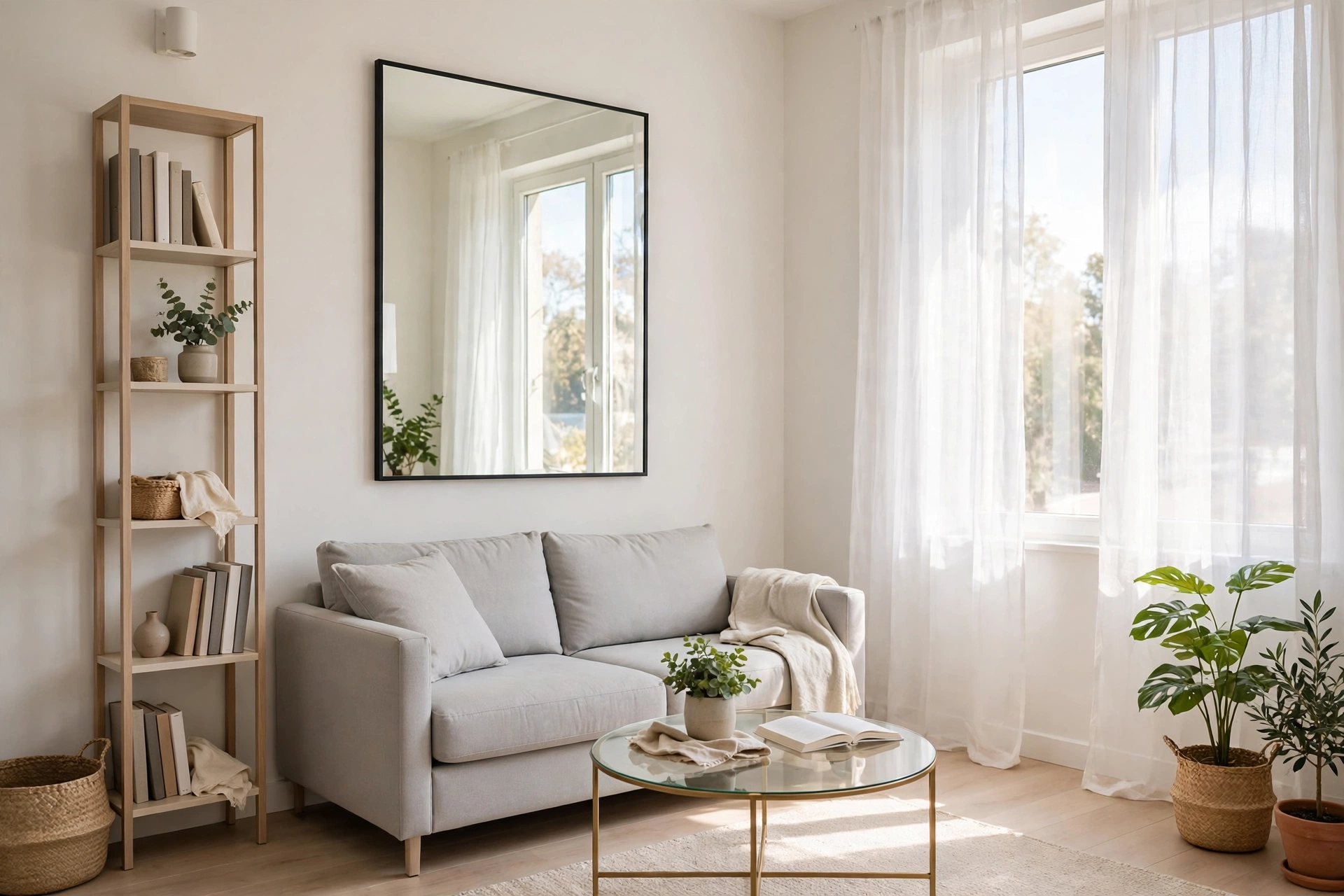
Swap thick curtains for sheer or light linen panels hung high — mount the rod close to the ceiling and let the fabric fall to the floor. This draws the eye upward and makes the window, and the wall, look taller. Keep windowsills clear so daylight actually reaches the room instead of stopping behind a row of objects.
Mirrors are the other half of this trick. A large mirror opposite or beside a window bounces daylight around the room and creates the impression of a second window. One well-placed mirror does more than five small decorative ones scattered around, so choose one generous piece and give it a clear spot.
Choose Furniture That Earns Its Floor Space
In a small apartment, every piece of furniture pays rent in floor space. A bulky three-seater sofa, a solid coffee table and a wide TV unit can swallow a living room before you have added anything personal to it.
Look for furniture with visible legs. A sofa or armchair raised off the floor lets you see the floor underneath, and that visible floor reads as extra space. Glass or acrylic coffee tables work the same way — they hold your cup without visually blocking the room. If you need storage, pick pieces that do two jobs: an ottoman that opens, a bench with space inside, or a bed with drawers underneath.
Scale matters more than style. One right-sized sofa beats a matching set that crowds the room, and a round dining table usually fits a tight corner better than a rectangular one because there are no sharp corners to walk around. These are the same principles behind good interior hacks for compact homes — small changes in shape and scale that free up real, usable room.
Use the Walls, Not the Floor
When floor space is limited, the walls are your extra square footage. Tall, slim bookshelves, floating shelves and wall-mounted storage pull the eye upward and keep the floor clear, which is exactly what makes a room feel bigger.
Hang shelves above door frames or over the sofa for books and plants, and use hooks and rails in the hallway and kitchen for coats, bags and utensils that would otherwise pile up on chairs and counters. Wall-mounted lights and a floating TV console free up even more floor than they appear to — the gap underneath them reads as open space.
Create Zones Without Building Walls
Most small apartments are one open space doing three jobs: living room, dining area and sometimes a workspace. Without clear zones, everything blurs together and the whole flat feels like one crowded room.
A rug is the simplest zone-maker. One rug under the sofa and coffee table instantly says “this is the living area,” and a different, smaller rug under a dining table or desk marks the next zone. A slim open bookshelf placed sideways can divide a sleeping area from a living area without blocking light the way a solid partition would.
Keep Surfaces Clear
Nothing shrinks a room faster than covered surfaces. A coffee table full of remote controls, magazines and chargers, a kitchen counter buried under appliances, a hallway chair holding three jackets — each one adds visual noise, and visual noise reads as clutter even when the room is technically tidy.
Give everything a home that is not a flat surface. A small tray on the coffee table corrals the remote and your keys into one neat group. A basket by the door holds shoes and bags. A single bowl on the kitchen counter replaces five scattered items. The goal is not an empty, show-home look — it is surfaces that are mostly clear, so the few things left on display actually stand out. If you want to go further, the art of minimalist living shows how owning less, on purpose, makes a small space feel calmer and more generous.
Colour, Pattern and Texture
Pale, warm wall colours — soft white, light grey, warm cream — reflect more light and make walls recede. That does not mean the room has to be all white. Paint the walls light and bring colour in through cushions, throws, art and plants, which you can change whenever you like without repainting.
One more useful rule: keep the big pieces in the same colour family. When the sofa, rug and curtains sit in similar light tones, the eye moves across the room without stopping at hard contrasts, and the space reads as one continuous area instead of a set of separate blocks.
Small Touches That Add Space
A few finishing details make a surprising difference. Layered lighting — a ceiling light plus a floor lamp and a table lamp — lets you light corners instead of blasting the whole room from one point, which softens shadows and makes the room feel deeper. A plant or two adds life and height without taking up floor space, especially trailing plants on a high shelf. And a single large piece of art on one wall feels more spacious than a crowded gallery wall, which can make a small room feel busy.
The same thinking applies to making the room feel welcoming, not just bigger — interior ideas for cozy living show how warmth and comfort work alongside space, so a small apartment feels like a home rather than a storage unit.
Mistakes That Make Small Apartments Feel Smaller
- Pushing all furniture against the walls. A few centimetres of breathing room behind a sofa actually makes the room feel larger, not smaller.
- Too many small pieces. Ten little tables and stools create more visual clutter than three well-chosen pieces.
- Dark, heavy curtains and rugs. They absorb light and visually close the room in.
- Keeping everything “just in case.” If something has not been used in a year, it is taking up space that your daily life needs.
FAQ: Small Apartment Decorating
What is the best colour for a small apartment?
Light, warm neutrals — soft white, pale grey, warm cream — reflect the most light and make walls feel further away. Add colour through cushions, art and plants rather than dark walls.
Should I use a big rug or a small rug in a small living room?
A rug large enough for the front legs of your sofa and chairs to sit on it works best. A rug that is too small chops the room up and makes it look smaller, while a generously sized rug ties the seating area together.
Do mirrors really make a room look bigger?
Yes, when placed well. A large mirror opposite or beside a window reflects daylight and the view, creating the impression of more space. Small mirrors scattered around have little effect, so one large mirror is better than several small ones.
Final Thoughts
Making a small apartment feel bigger is not about buying more things or spending a lot of money. It is about light, scale and breathing room: sheer curtains and a large mirror, furniture with visible legs, storage that goes up the wall instead of across the floor, and surfaces that stay mostly clear. Start with one change — the mirror, the rug, or clearing a single surface — and you will feel the difference the same evening. A small home, arranged with intention, can feel more spacious than a large one that was never thought through.