You land in a new city with seven days and a list of forty attractions. By day three your feet ache, your camera roll is full, and you cannot remember what you saw on day one. Most of us have lived this trip. Slow travel is the answer to it — and it takes more planning than simply going nowhere fast. This guide shows you how to plan a slow travel itinerary that trades rushing for remembering.
Start With Your Travel Intention, Not Your Destination List
A slow itinerary begins before you open a map. Ask yourself what you actually want from this trip: rest, new food, long walks, conversations with locals, time to read? Write the answer down in one sentence. That sentence becomes your filter. If your intention is rest, a four-city dash is already wrong. If your intention is to understand a place’s food culture, three nights in one neighborhood beats one night in three.
Choose Fewer Destinations and Stay Longer
The heart of slow travel is simple arithmetic: fewer bases, more nights per base. A useful rule is to plan for at least three nights per stop — fewer than that and you spend more time arriving and leaving than actually being there. Two stops in two weeks beats six stops in two weeks every time, because you stop paying the “transition tax” of packing, checking out, navigating transport, and learning a new neighborhood.
Pick stops that reward depth: a coastal town with a weekly market, a city with distinct neighborhoods, a valley with day-trip options. Depth is the payoff — you learn which bakery opens earliest, which square empties at sunset, where the locals actually eat.
Build Your Days Around a Gentle Rhythm
Slow travel does not mean empty days; it means a humane pace. Plan one meaningful experience per day — a morning museum, a cooking class, a coastal walk — and let the rest of the day form around it. Mornings are usually when energy and light are best, so anchor your main activity early and keep afternoons open for wandering, resting, or lingering over lunch.
Travel fatigue is real, and it is cumulative. If day one was a long travel day, day two should be light. Alternate your heavy and light days the way you would alternate workouts and rest days. This is also where road-trip thinking helps: the experience of road-tripping Iceland’s Ring Road shows how a journey works best when the pace is set by the landscape and the day, not by a checklist.
Plan Your Route With Realistic Distances
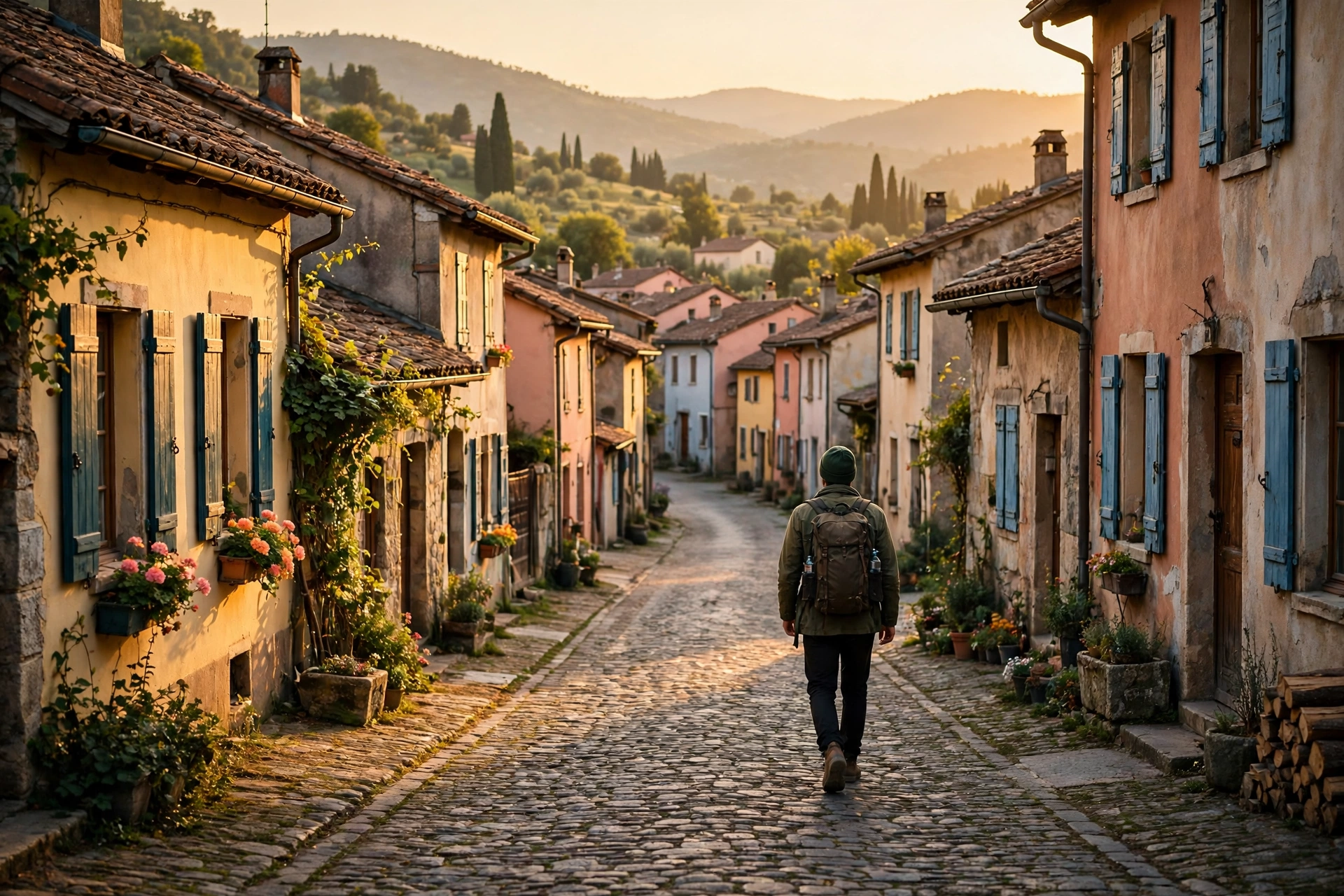
Few things destroy a slow trip faster than optimistic travel math. Measure your route honestly: look up actual journey times between stops, add buffer for transfers, and count a travel day as a travel day, not a sightseeing day. On a map, two towns may look close; on a regional bus schedule, they may be half a day apart.
Prefer direct routes over scenic-but-slow ones on moving days, keep your first stop close to your arrival point so day one is not wasted, and avoid more than one travel day in any three-day stretch. Distance you do not have to cover is rest you get to keep.
Pick Stays That Support Slow Travel
Your accommodation shapes your pace. An apartment or guesthouse with a kitchen invites you to shop at the local market and eat at your own rhythm; a homestay or small family-run inn connects you to people who live there year-round. Stay in neighborhoods where daily life happens — near the market, the bakery, the park — rather than in transit corridors built for one-night stays.
Book the first night or two ahead for peace of mind, and if your trip is longer, consider leaving later nights flexible so you can stay longer in a place that unexpectedly earns your heart. That flexibility is the slow traveler’s greatest luxury.
Leave Blank Space for the Unexpected
Here is the part most planners skip: schedule nothing. Reserve at least a quarter of each day — and at least one full day per week-long trip — with no plan at all. This is where slow travel pays its dividends: the festival you did not know about, the restaurant the market vendor recommended, the sunset walk you took because you had nothing else to do.
If unstructured time makes you nervous, give it a gentle frame rather than a schedule — “Saturday afternoon: wander the old quarter.” The joy of wandering the canals of Venice, for instance, is exactly this kind of unhurried exploring: no agenda, no queue, just the city revealing itself at walking pace.
Let the Local Rhythm Guide You
Once you arrive, tune into the local schedule. Eat when locals eat. Notice when the town goes quiet in the afternoon and when it comes alive at night. Ask your host what they do on their day off. Slow travel works because you are syncing with the place’s own tempo instead of imposing your own.
Simple ways to do this: learn a few phrases in the local language, shop at the neighborhood market, take public transport instead of taxis, and sit in the same café twice — regulars get better recommendations than tourists.
Keep the Slow Mindset on the Road
Plans are only half of it; the other half is how you carry yourself day to day. Resist the urge to add “just one more” stop when a day is going beautifully. Take fewer photos and more notes. Let a rainy afternoon be a reading afternoon instead of a ruined one. This mindset — the same spirit captured in finding peace in the heart of Bali — is what turns a well-planned itinerary into a genuinely restful trip: presence over performance, depth over breadth.
Frequently Asked Questions
How long should a slow travel itinerary be?
There is no minimum, but the approach shines on trips of five days or more. With fewer than five days, simply plan one base and one side trip instead of trying to fit multiple stops.
Is slow travel more expensive than regular travel?
Not necessarily. Fewer flights and trains cut transport costs, longer stays often unlock weekly rates, and cooking some meals at a market saves significantly on food. Where costs can rise is accommodation quality — and that is a choice, not a requirement.
Can you slow travel with kids?
Yes, and many families find it easier. Fewer transitions mean less packing and fewer meltdowns, and a longer stay lets children settle into a routine. Build the itinerary around one morning activity, quiet afternoons, and a flexible evening.
What is the biggest mistake in planning a slow travel itinerary?
Trying to slow-travel a fast itinerary. If your route has a travel day every other day, no amount of “leaving afternoons free” makes it slow. The route itself has to breathe.
Final Thoughts
Planning a slow travel itinerary is really about deciding what you are not going to do. Fewer stops, gentler days, honest distances, stays that feel like living there, and blank space for serendipity — that is the whole formula. The reward is a trip you actually remember, in a place you actually know, at a pace that feels like your own. Start with your intention, protect your time, and let the journey unfold.