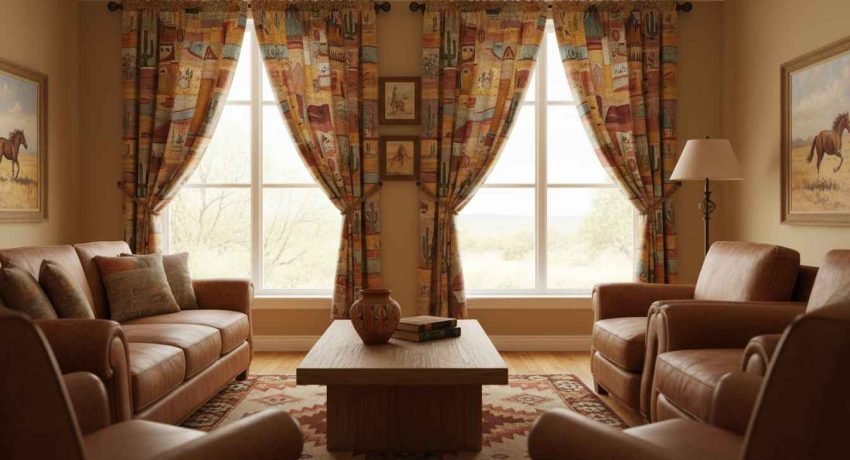
It may seem counterintuitive, but adding western curtains to a living room can simultaneously make the space feel both larger and cozier. This paradox lies in the clever balance of texture, pattern, and light control that western-style window treatments offer. They transform bland, flat walls into dynamic visual statements while subtly controlling the ambiance of the room.
Western curtains are more than just decorative fabric; they are an experience. Crafted from heavy-duty materials like cotton, linen, or blended weaves, they provide insulation, privacy, and a tactile charm that softens modern minimalist interiors or complements rustic wood accents. The beauty lies in the attention to detail – the stitching, fringe, or embroidery – that conveys authenticity and sophistication.
Choosing the right western curtains involves more than picking a color or pattern. You need to consider the scale of the room, the height of the windows, and the type of natural light entering your living room. For wide, sunlit rooms, lighter shades of taupe, beige, or dusty rose can add warmth without overwhelming the space. For smaller rooms or darker interiors, deep earthy tones like terracotta, forest green, or chocolate brown create intimacy and depth.
For homeowners and designers seeking premium options, Lafuente offers a curated selection of western curtains that merge authenticity with modern practicality. Their range showcases patterns inspired by Southwestern motifs, classic plaid, and handwoven textures – each designed to elevate the living room experience.
Step 1: Assess Your Living Room Layout
Before selecting curtains, take a careful inventory of your space. Measure the window height, wall width, and note furniture placement. Western curtains often have bold patterns, so alignment with other decorative elements like rugs, throws, and wall art is crucial. Avoid visual competition that can make the room feel cluttered. Instead, aim for balance – allow the curtains to be the focal point while other elements complement subtly.
In today’s fast-paced world, creating a cozy and inviting home environment has become more important than ever. One of the simplest yet most effective ways to infuse your space with warmth and personality is through the use of decorative elements that reflect your style. Among these, wood signs home decor stands out as a unique choice that combines rustic charm with modern aesthetics. Whether you prefer inspirational quotes, playful designs, or family names, these handcrafted pieces can transform any room into a welcoming haven. In this article, we will explore how to incorporate wood signs into your decor, ensuring your home truly feels like your own.
Step 2: Choose Fabric and Pattern Wisely
Fabric selection is a decisive factor in both function and aesthetics. Heavier fabrics like velvet or thick linen block sunlight and provide insulation, ideal for northern-facing rooms. Lighter cotton or blends allow gentle light diffusion while still preserving the rustic charm. Patterns matter: classic western motifs such as geometric tribal prints, subtle stripes, and embroidery bring authenticity. Be cautious with overly busy prints – they may dominate the space rather than enhance it.
Step 3: Consider Curtain Hardware
Hardware often gets overlooked, but the right rods and brackets amplify the western aesthetic. Wrought iron, distressed wood, or bronze-finished rods pair perfectly with western curtains. Decorative finials shaped like arrows, horseshoes, or rustic knobs subtly reinforce the theme without turning the living room into a costume set. Functionally, ensure smooth gliding mechanisms to prevent fabric snagging.
Step 4: Layering and Accessorizing
Layering curtains can elevate their impact dramatically. A sheer inner layer paired with the heavier western curtain offers flexibility – diffuse light on sunny mornings, block it entirely during late afternoon glare. Accessories like tiebacks in braided leather or rustic metal can hold curtains elegantly when drawn. Small details like these bridge practicality with style, ensuring the space feels curated rather than contrived.
Potential Drawbacks
Western curtains are striking, but they are not universal. For ultra-modern minimalist spaces with sleek lines, their textures and patterns may clash. Additionally, heavy fabrics require maintenance – they collect dust and need periodic cleaning to avoid fading or odors. Those living in humid climates should be cautious of mold buildup if fabrics are left drawn for long periods. The key is to weigh aesthetics against practicality.
Cheat Sheet: Western Curtain Essentials
- Color Strategy: Light shades for airy rooms; dark shades for cozy intimacy.
- Fabric Choice: Cotton, linen, or velvet depending on light and insulation needs.
- Pattern Balance: Southwestern motifs, plaid, or subtle embroidery for authenticity.
- Hardware: Wrought iron or distressed wood rods; themed finials optional.
- Layering: Sheers inside for flexibility; tiebacks for style and function.
- Maintenance: Regular cleaning required for longevity.
Behind the Scenes: How This Conclusion Was Reached
The approach to recommending western curtains for living rooms comes from hands-on experience in tiny house and compact space design. By testing various fabric weights, patterns, and hardware combinations, we observed which options enhanced natural light control while creating an inviting aesthetic. Focus groups revealed that living rooms treated with carefully chosen western curtains consistently felt warmer, more intimate, and visually grounded compared to generic drapes. Lafuente’s curated selections integrate these tested principles for optimal results.