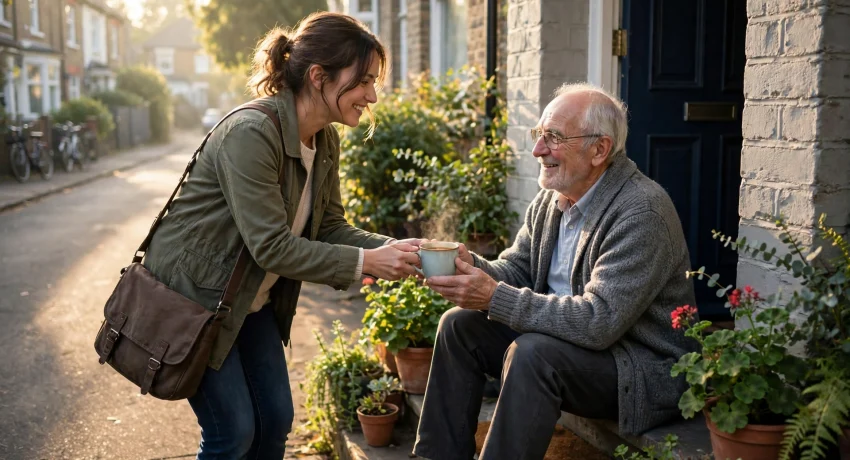
Morning light comes through the window before the day has properly started. The kettle clicks, the street outside is still quiet, and for a few minutes nothing is being asked of you. It is in moments like this — small, ordinary, easily missed — that life quietly shows its shape: not in grand events, but in light, in kindness, and in the spirit we bring to an ordinary day.
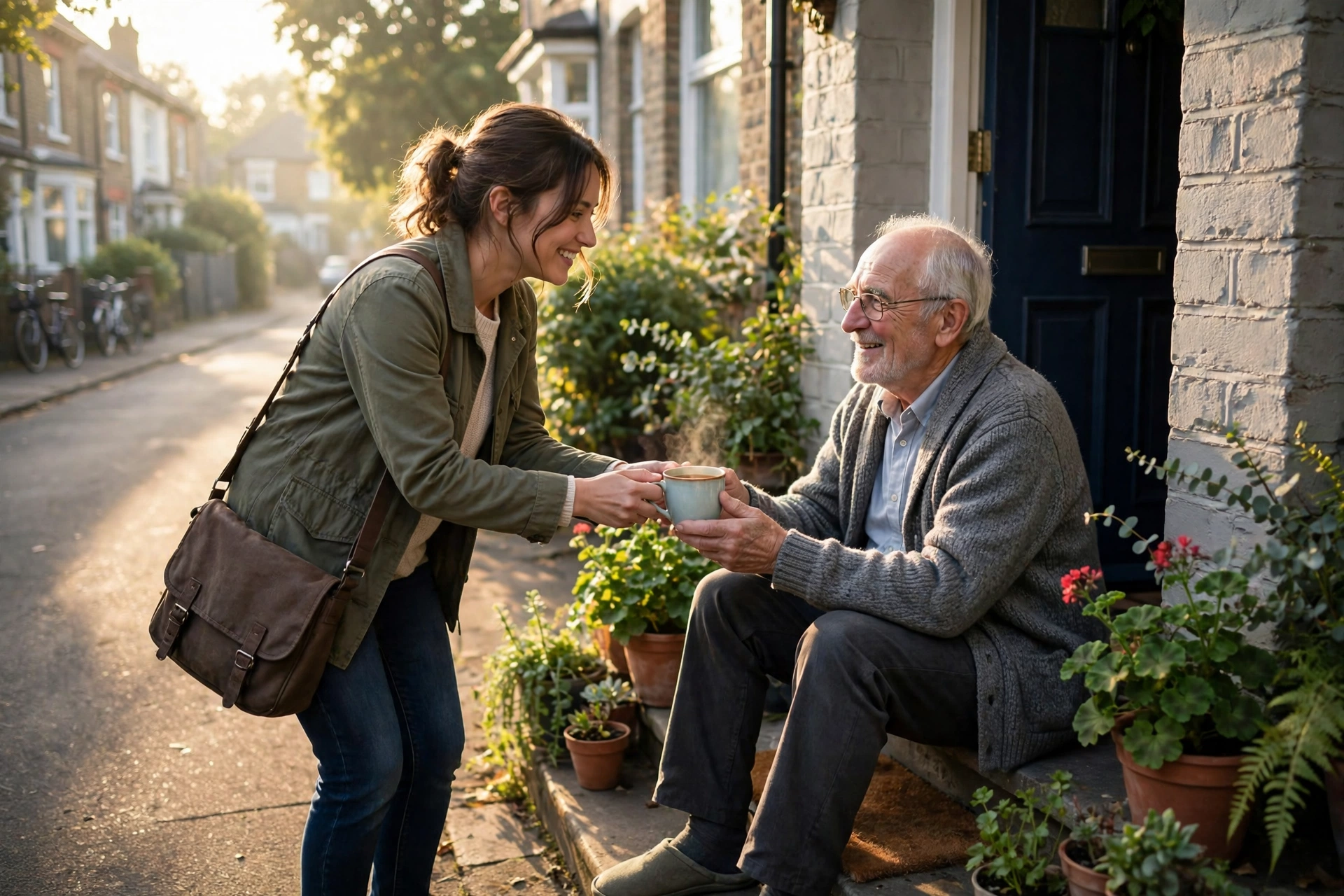
Noticing the Light in an Ordinary Day
Most days do not announce themselves. They begin with routine: getting up, making breakfast, answering messages, stepping out into weather you did not choose. It is easy to move through such a day on autopilot, noticing nothing until it is over. The first practice this article suggests is simply noticing — the quality of the morning light, the smell of rain on warm pavement, the sound of someone laughing in the next room.
Noticing is not the same as forcing positivity. Some days are hard, and no amount of noticing makes a difficult week easy. But attention changes what a day contains. When you pause for even a minute — at a window, on a walk, over a cup of tea — you give the day a chance to register. Over time, those minutes add up to a life that feels lived rather than merely passed through.
Kindness as a Daily Practice
Kindness is often pictured as something large: a donation, a rescue, a grand gesture. In practice, it is usually much smaller, and much more available. It is letting someone go ahead of you in a queue, remembering a colleague’s difficult week and asking after it, or leaving a kind note for someone who will not expect one. Small kindnesses cost little, but they change the texture of a day — for the person receiving them, and often just as much for the person offering them.
The key is that kindness does not need an audience or a reward. A kind word said when nobody is watching still counts, and in some ways it counts more, because it was done for its own sake. If you are looking for a place to start, start close to home: with the people you live with, work with, and pass every day. They are the ones most likely to notice, and most likely to pass it on.
What “Spirit” Means Here
Spirit is a word people use in many ways — religious, philosophical, or simply as a name for the inner life. Here it means something simple: the part of you that notices, cares, and keeps going. It is the patience you find when a plan falls apart, the humour that appears in the middle of a bad day, and the quiet determination to try again tomorrow.
Looking after that inner life is not mysterious. It is built from ordinary habits: enough sleep, time outdoors, honest conversation, and moments of quiet without a screen. None of these require a special programme or purchase. They require only the decision to protect a little time each day for things that restore you, rather than things that merely fill the hours.
Creativity Belongs to Everyone
The old version of this article ended with a single true sentence: that in embracing our creativity and vision, we discover we are able to create beautiful and amazing things that enrich our lives and inspire others. That sentence is worth keeping, because creativity is not reserved for artists. Cooking a meal from what is in the cupboard, rearranging a room, telling a story to a child, or solving a problem at work in a new way — all of these are acts of creation.
You do not need to be good at something to enjoy making it. In fact, the pressure to be good is often what stops people from starting. Try something small and unfinished: a sketch, a few lines in a journal, a photograph of the light on your street. The point is not the result. The point is the act itself, and the way it connects you to your own attention and imagination.
For a longer guide to that side of life, We Are Able to Create Beautiful and Amazing Things explores everyday creativity in more detail, and Keeping Kindness in Your Relationship Over the Years looks at how small, steady kindnesses sustain the people closest to us.
When the Days Feel Heavy
Not every season of life feels light, and this article does not pretend otherwise. There are weeks when kindness feels hard, when the light seems thin, and when simply getting through the day is an achievement. In those times, the practices described here shrink to their smallest form: one kind word, one short walk, one honest conversation. That is enough.
If low mood, worry, or exhaustion persist, or begin to affect your daily life, talking to a trusted person — or to a doctor or mental-health professional — is a sensible and strong step, not a failure. General reflections like these are no substitute for professional help, and asking for help is itself a kind of courage.
A Simple Practice for Tomorrow
Try this tomorrow, without making a project of it. In the morning, notice one thing you like about the light or the weather. During the day, do one small kindness without telling anyone. In the evening, write down one moment from the day you would like to remember. Three small acts, none of them difficult, and none of them requiring anything you do not already have.
Repeat it the next day, or don’t. The practice works best when it stays light — something you return to because it helps, not something you grade yourself on. Over weeks and months, though, it has a quiet effect: days start to feel less like something happening to you, and more like something you are part of.
FAQs
What does it mean to live with more kindness?
It means choosing small, considerate actions in everyday life — listening properly, helping without being asked, and speaking gently — rather than waiting for a grand opportunity to be kind.
Do I need a spiritual practice to benefit from this?
No. The ideas here — noticing, kindness, creativity, rest — work whatever your beliefs. Take what fits your life and leave the rest.
What if I am too busy for any of this?
Start with the smallest version: one noticed moment, one kind word, one minute of quiet. Small practices survive busy weeks; large ones usually do not.
Final Thoughts
Life, light, kindness and spirit are not separate subjects. They are four names for the same thing: attention paid to an ordinary day. Notice the light. Offer the kindness. Protect the quiet part of yourself that makes both possible. The years are made of days like this one — and this one, looked at closely, is already enough to begin with.