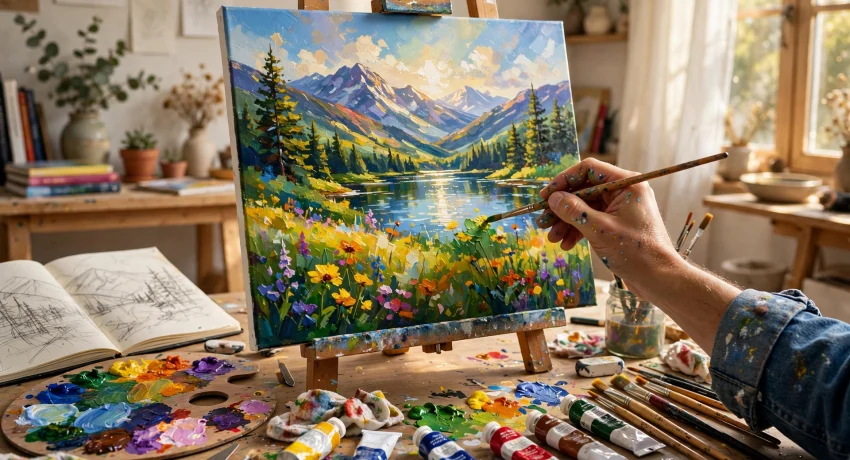
Look around your room right now. The chair you are sitting on, the phone in your hand, the painting or poster on the wall — at some point, each of these was nothing more than a vague idea in someone’s head. Someone imagined it, sketched it, argued about it, rebuilt it, and eventually made it real. That quiet impulse to shape raw material into something meaningful is not a rare talent reserved for a chosen few. It is a deeply human ability, and it is yours too.
The simple truth is this: we are able to create beautiful and amazing things because creation is one of the core things our minds are built for. The question is not whether you are creative. It is whether you are giving that creativity room to work.
Why the Human Mind Is Built to Create
Creativity is not magic; it is the natural output of how our brains function. We notice patterns, remember experiences, and — unlike any other species — we can imagine things that do not exist yet and then work backward to make them real.
- Imagination lets you prototype the future. Before an architect draws a line, she walks through the finished building in her mind. Before you rearrange your living room, you picture it finished. That mental simulation is the first draft of everything we make.
- Problem-solving turns obstacles into inventions. Much of what we call creativity is simply refusing to accept a bad situation. The wheel, the umbrella, the smartphone app you rely on every day — all were born from someone thinking, “there has to be a better way.”
- Our hands and tools extend our ideas. Whether it is a paintbrush, a sewing machine, a guitar, or a spreadsheet, tools let us externalize what is in our heads so we can improve it, share it, and build on it.
- Emotion gives creation its meaning. A bridge is engineering; a bridge designed to inspire awe is art. When we pour feeling into our work, we turn functional objects into beautiful ones.
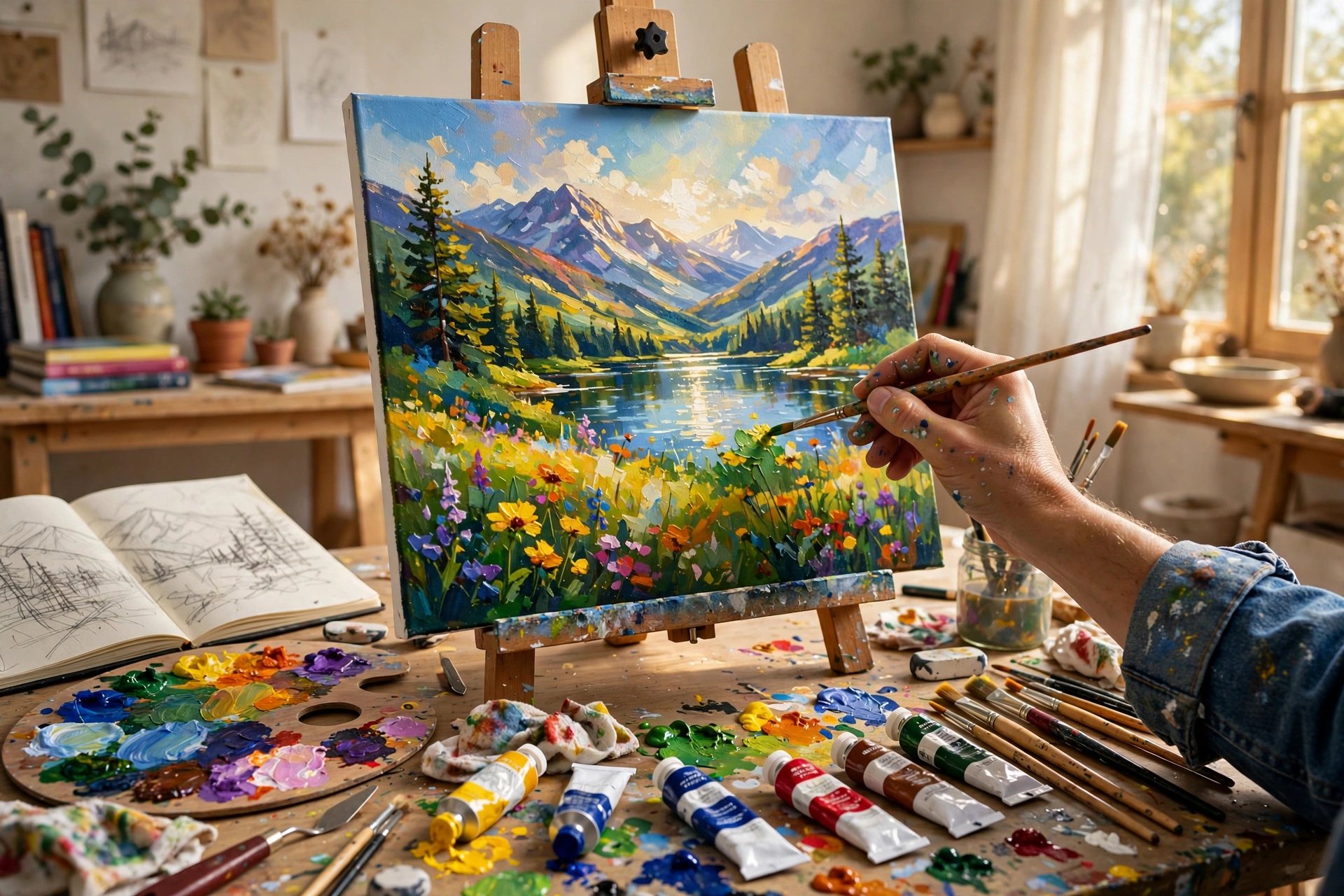
7 Practical Ways to Unlock Your Creative Ability
Knowing you are creative is one thing; using it is another. These are concrete habits that genuinely productive creators rely on — not vague advice to “think outside the box.”
1. Keep an idea notebook
Ideas arrive at inconvenient times — in the shower, on a walk, just before sleep. Capture them immediately, without judging them. A notebook (paper or digital) full of half-formed ideas is raw material; review it weekly and you will be surprised how many connect into something bigger.
2. Give yourself constraints
Counterintuitively, limits fuel creativity. Try writing a story in exactly 100 words, cooking a meal from only five ingredients, or designing something using two colors. Constraints force your brain to find clever solutions instead of defaulting to the obvious.
3. Finish small things
Grand unfinished projects teach you nothing. Completed small projects teach you everything — how long things take, where your weaknesses are, what finishing feels like. Start with something you can complete this weekend, then take the first step toward success by understanding how that first completed project changes your momentum.
4. Borrow, remix, and make it yours
Every creative tradition is built on what came before. Study work you admire, figure out exactly what makes it effective, and adapt those techniques to your own projects. Originality is rarely about inventing from nothing — it is about combining influences in a way only you can.
5. Make room for boredom
Constant stimulation kills imagination. Take walks without your phone, sit with a cup of tea and stare out the window, let your mind wander. Daydreaming is not wasted time; it is the workshop where your subconscious assembles ideas.
6. Learn the basics of a craft
You do not need mastery to start, but learning fundamentals — color theory for painting, chord progressions for music, basic joinery for woodworking — multiplies what you can express. Skill is the vocabulary; creativity is what you say with it.
7. Share before it feels perfect
Perfectionism is creativity’s greatest enemy. Show your work to trusted people early. Feedback on an imperfect draft is infinitely more useful than praise for a project you never finished because it was not ready.
Creativity Lives in Everyday Life
We tend to picture creativity as something that happens in art studios, but it is everywhere. The home cook who improvises a dinner from leftovers is creating. The teacher who finds a new way to explain fractions is creating. The gardener who designs a flower bed, the parent who invents a bedtime story, the programmer who writes an elegant solution — all are shaping something beautiful and amazing out of nothing.
Recognizing this matters, because it removes the pressure of the word “artist.” You do not need a gallery showing to be a creator. You just need the willingness to make something that did not exist before you touched it.
What Stops Most People (and How to Move Past It)
If creating is natural, why do so many people feel they “aren’t creative”? Usually one of three blocks is in the way:
- Comparison. You compare your first attempt to someone else’s tenth year. The fix: compare yourself only to your own past work.
- Perfectionism. You wait until you are “good enough” to begin. The fix: accept that early work will be rough — that is the price of admission, and everyone pays it.
- Busyness. You never schedule time to create. The fix: protect even 20 minutes a day. Small, consistent sessions beat occasional marathons.
Final Thoughts
We are able to create beautiful and amazing things — not because we are all geniuses, but because imagination, resourcefulness, and the drive to improve are standard human equipment. The paintings, songs, recipes, gardens, businesses, and stories that enrich the world all started the same way: with someone deciding to make something rather than just consume it.
Pick one small project this week. Something you can finish. Something that excites you a little and scares you a little. Then start. The world does not need another perfect idea kept safely in your head — it needs the beautiful, imperfect, amazing thing only you can make.